17 Modern Backyard Design Ideas for a Stylish Outdoor Space
Your backyard can be more than an empty patch of grass. With the right backyard design ideas, even a simple outdoor area can become a comfortable place to relax, dine, garden, or entertain.
The challenge is knowing where to begin. You may have a small yard, an awkward layout, limited privacy, or a space that feels unfinished. These modern ideas focus on practical changes that add structure, comfort, and visual interest without making the design complicated.
From stone patios and layered greenery to pergolas, fire pits, privacy screens, and outdoor dining areas, you’ll find inspiration for different backyard sizes and styles. In my experience, the most successful outdoor spaces usually combine a few well-planned elements instead of trying to add everything at once.
Stone Patio Seating

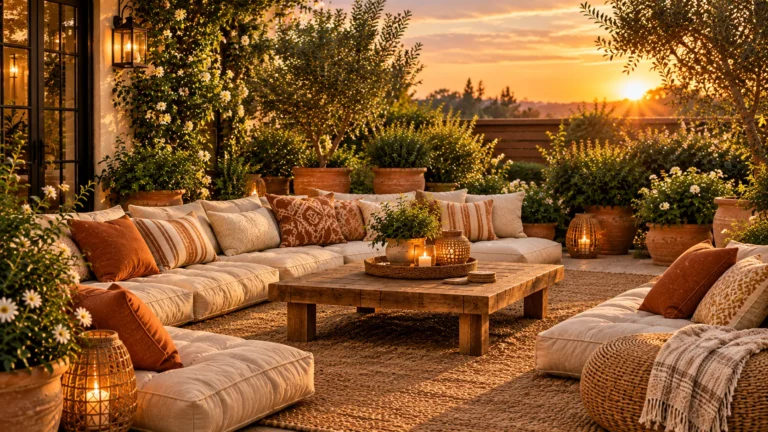
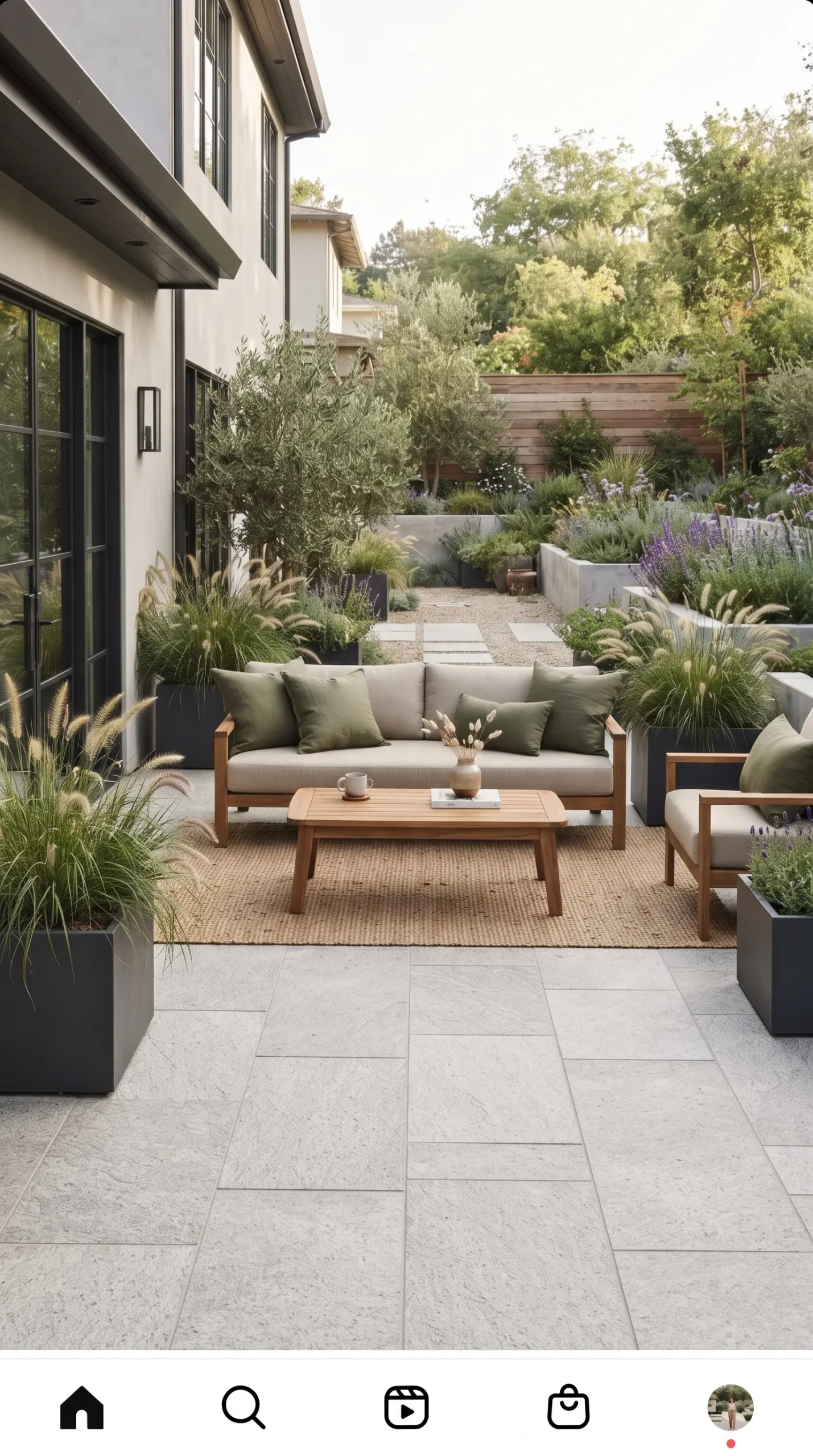
A well-planned patio gives the backyard a clear place for relaxing, dining, and entertaining. Choose large-format stone or concrete pavers in soft gray, beige, or warm taupe. Keep the furniture low and streamlined so the area feels modern without looking crowded.
In my experience, leaving generous walking space around the seating makes even a compact yard feel more open. Add one outdoor rug and a few oversized planters to define the sitting zone. This simple arrangement creates a comfortable foundation for many contemporary backyard layouts.
Layered Greenery

- Combine tall ornamental grasses with medium-height shrubs for visual depth.
- Place evergreen plants near seating areas to maintain structure throughout the year.
- Use silver or blue-green foliage to break up darker planting areas.
- Repeat two or three plant varieties instead of mixing too many species.
- Add dark mulch to make green foliage stand out and reduce visible soil.
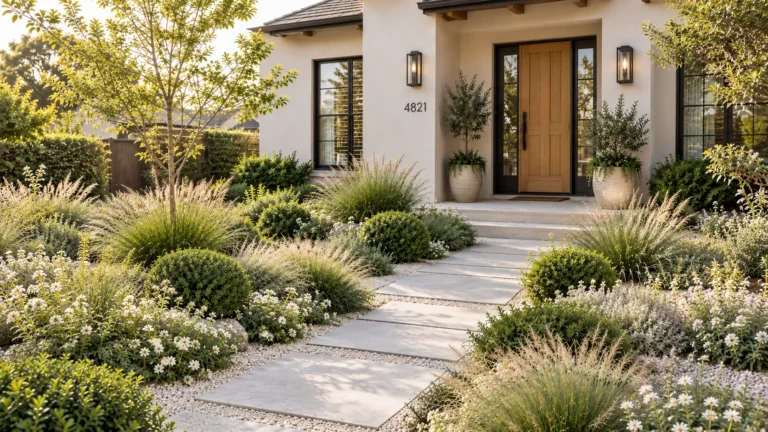
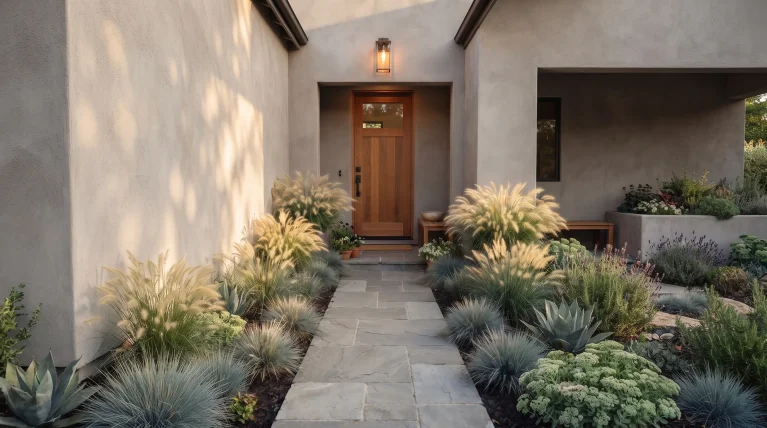
Layered planting makes a modern yard feel established without requiring complicated landscaping. Start with the largest plants first, then fill gaps with lower greenery and groundcover. Leave enough room for mature growth, especially beside pathways and fences. A simple repeating plant palette usually looks more intentional than a crowded collection.
Warm String Lighting
Quick Tip:
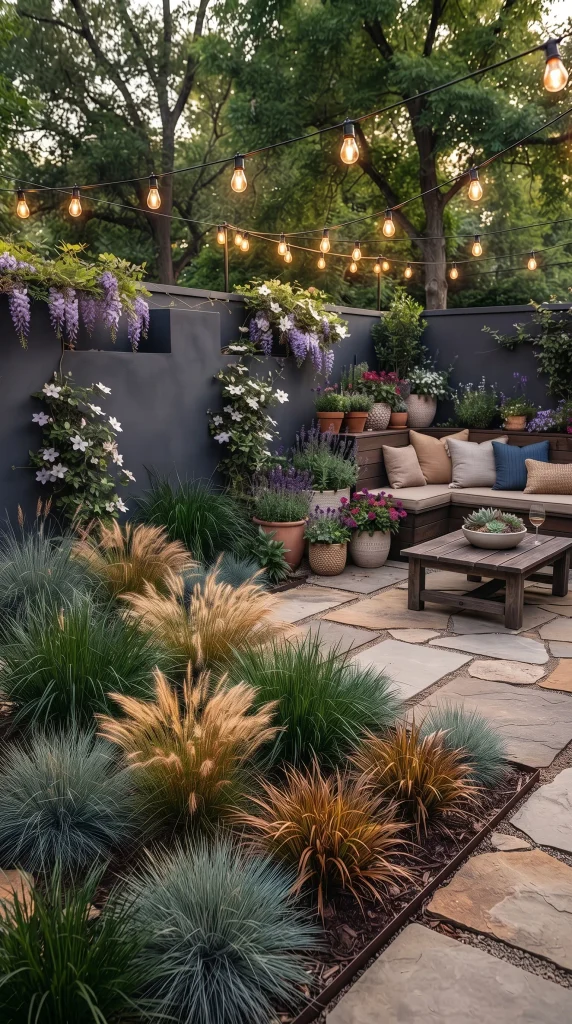
Place string lights high enough to keep the seating area visually open, then cross them in simple straight lines rather than creating a dense canopy. Choose warm white bulbs around 2700K to create a softer evening atmosphere without making the yard feel overly bright.
Lighting can change how the entire backyard feels after sunset. Mount weather-rated string lights to sturdy posts, a pergola, or suitable structural points, and keep electrical connections protected from moisture. I’ve noticed that combining overhead lights with two or three low landscape lights gives a more balanced result than relying on one bright fixture.
Built-In Bench Seating
BEFORE:
A narrow backyard can quickly feel cramped when several freestanding chairs occupy the floor. Furniture may also block pathways and leave awkward corners that are difficult to use.
AFTER:
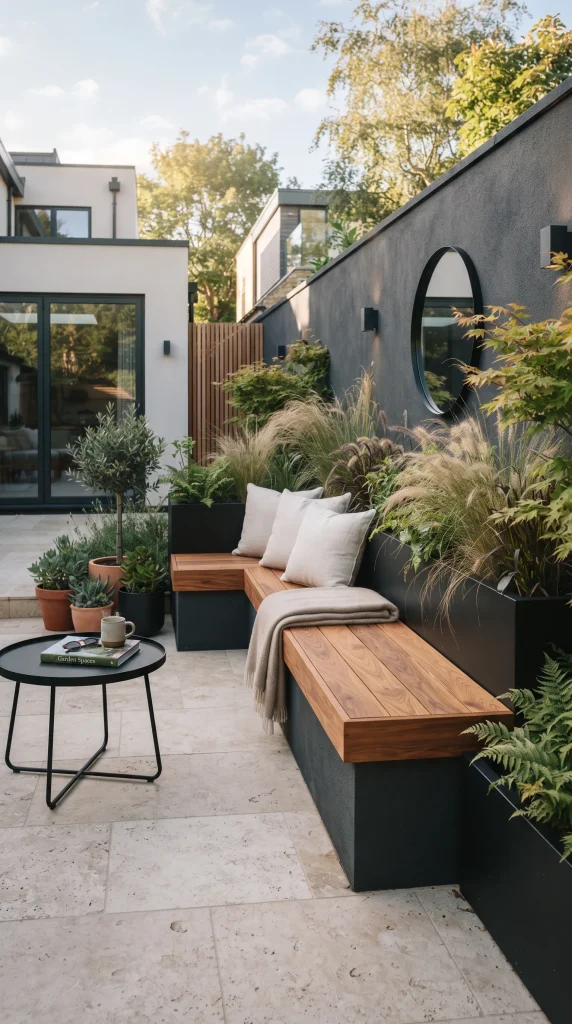
A built-in bench uses the edge of the yard for seating while keeping the center open. Add weather-resistant cushions and a slim side table to create a comfortable lounging spot without taking up unnecessary floor space.
For small outdoor areas, built-in seating provides both function and structure. Use treated timber, composite boards, or masonry with a durable seat surface. Include hidden storage beneath the bench if possible. The result is especially useful beside fences, retaining walls, or patios where unused edges can become practical seating zones.
Modern Pergola Shade

- Choose the location: Position the pergola over a seating or dining area that receives strong midday sun.
- Set the proportions: Keep the structure large enough to shade the main furniture without overwhelming the yard.
- Select materials: Pair black metal with warm timber for a balanced contemporary look.
- Add shade: Install adjustable fabric panels or outdoor curtains when extra sun protection is needed.
- Finish the setting: Place planters around the posts to soften the structure.
A pergola creates a defined outdoor room while adding useful shade. For a polished appearance, repeat its finish elsewhere, such as in fence hardware, lighting, or furniture frames. I’ve seen this approach work particularly well in open yards where a seating area needs stronger definition without building a fully enclosed structure.
Minimalist Water Feature

| Feature | Option A | Option B |
| Style | Raised geometric basin | Ground-level reflecting pool |
| Space | Works well in compact yards | Needs more open floor area |
| Maintenance | Simple filtration and cleaning | Larger surface requires more upkeep |
| Visual effect | Strong architectural focal point | Broad, reflective appearance |
A small water feature can introduce movement and sound without dominating the landscape. Keep the shape simple and repeat nearby materials for visual consistency. Choose a location where leaves are easy to remove and electrical access is practical. For busy households, a compact recirculating feature is usually easier to maintain.
Raised Garden Beds

DO:
- Use straight-edged beds to complement modern backyard architecture.
- Choose cedar, composite, or powder-coated metal for durable construction.
- Keep each bed narrow enough to reach the center comfortably.
- Group herbs and vegetables according to their sunlight and watering needs.
DON’T:
- Don’t place tall crops where they block seating areas.
- Don’t overcrowd beds with plants that spread aggressively.
- Don’t use untreated timber that may deteriorate quickly outdoors.
- Don’t forget drainage holes when using enclosed containers.
Raised beds bring edible gardening into a clean, organized layout. They also make planting and maintenance easier because the soil level is higher and clearly contained. I’ve noticed that repeating the same bed shape throughout a yard creates stronger visual structure. Add gravel paths between beds for easy access.
Gravel Lounge Area

Cost: Moderate | Time: One to two days | Skill Level: Beginner to intermediate
Best For: Small patios, side yards, and informal seating zones
Maintenance: Rake gravel occasionally and remove leaves regularly
Result: Defined outdoor area with strong texture and drainage
A gravel seating area offers an easy alternative to a fully paved patio. Begin with a properly compacted base and install edging to keep stones contained. Choose angular gravel that locks together underfoot, then place furniture on a stable outdoor mat or paved pad for comfortable use.
Vertical Plant Wall
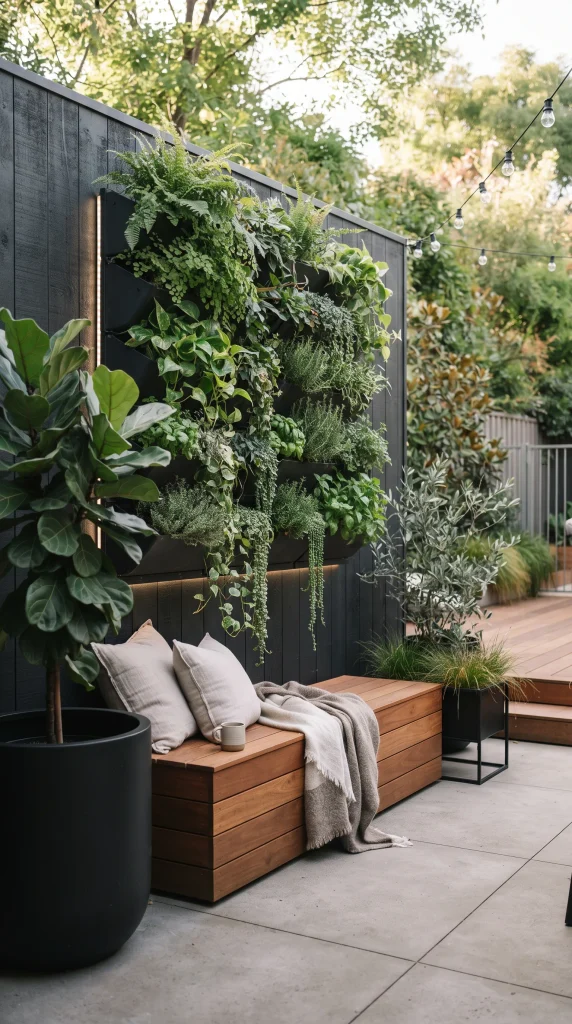
A blank wall becomes useful when greenery is moved upward. Install a modular planter system, wall-mounted pots, or a trellis depending on the plants and available sunlight. Keep irrigation accessible so watering remains manageable, especially during hot weather.
Vertical planting works particularly well where floor space is limited. Use herbs near a kitchen entrance, shade-tolerant foliage on covered walls, or flowering climbers on sunny fences. Leave enough clearance around the wall structure for airflow and maintenance. A restrained mix of foliage usually creates a cleaner modern effect than dozens of unrelated plants.
Outdoor Dining Nook
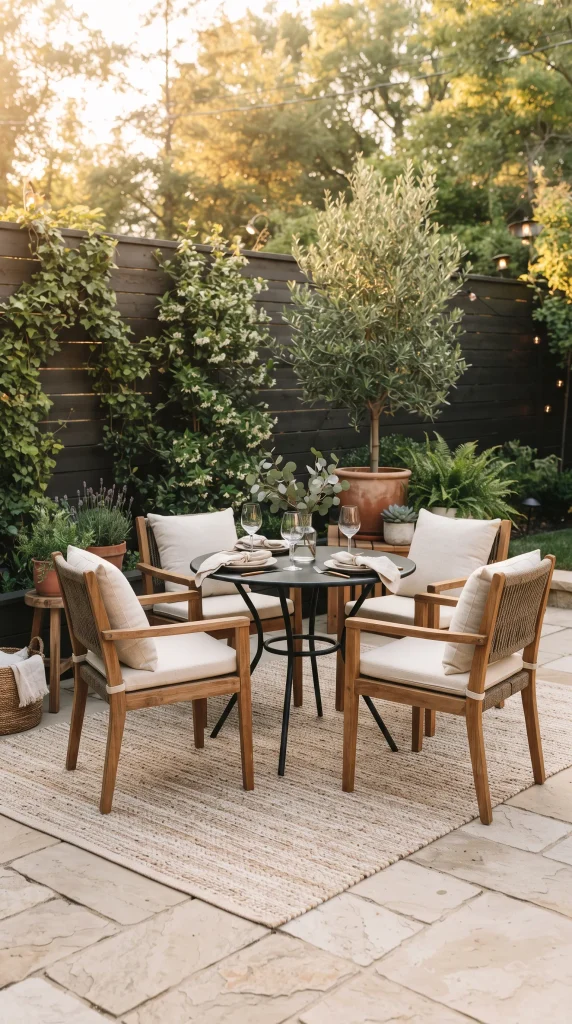
- Choose a table size that leaves at least 36 inches of comfortable walking space around the main seating area.
- Use weather-resistant materials such as powder-coated metal, teak, or composite furniture.
- Position the dining set near the kitchen or outdoor cooking area for easier serving.
- Add a pendant-style outdoor light or warm string lights above the table.
- Keep decorative pieces minimal so the dining surface remains practical.
An outdoor dining nook makes everyday meals feel more intentional without requiring a large patio. A compact rectangular table works well in narrow yards, while round tables improve circulation in tighter corners. Add washable cushions and durable tableware for a setup that handles family dinners, weekend guests, and casual outdoor breakfasts.
Fire Pit Circle
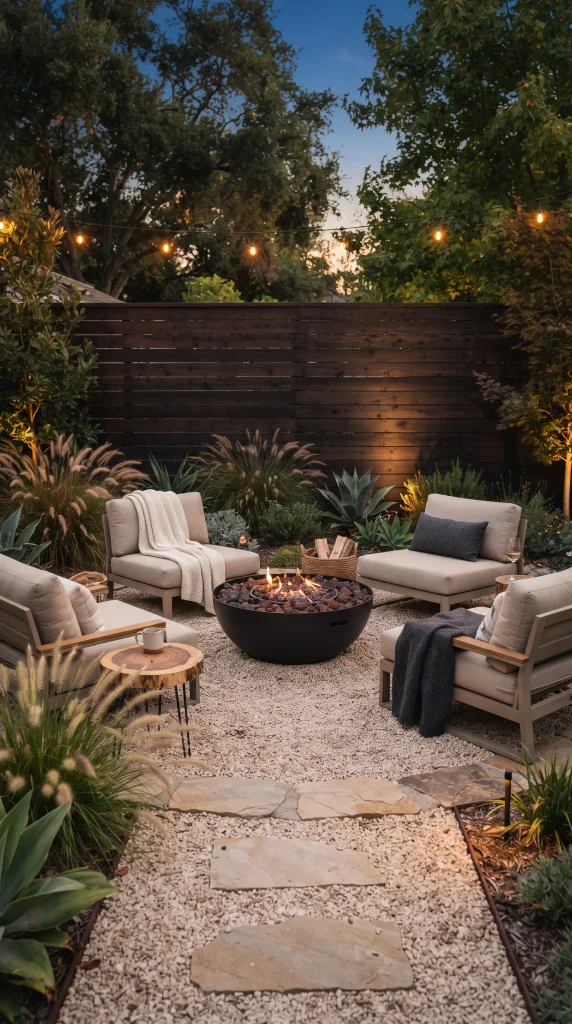
Quick Tip:
Keep the fire pit on a noncombustible surface such as gravel, concrete, or suitable paving, and follow local fire-safety requirements. Leave generous clearance between flames, furniture, fences, trees, and overhead structures. Choose seating with enough space for people to move safely around the circle.
A fire pit can give a backyard a natural gathering point after sunset. Keep the surrounding furniture simple so the flames remain the visual focus. I’ve seen circular arrangements work especially well because everyone can face the center comfortably. Add a small table nearby for drinks, blankets, or serving pieces.
Privacy Screen Panels
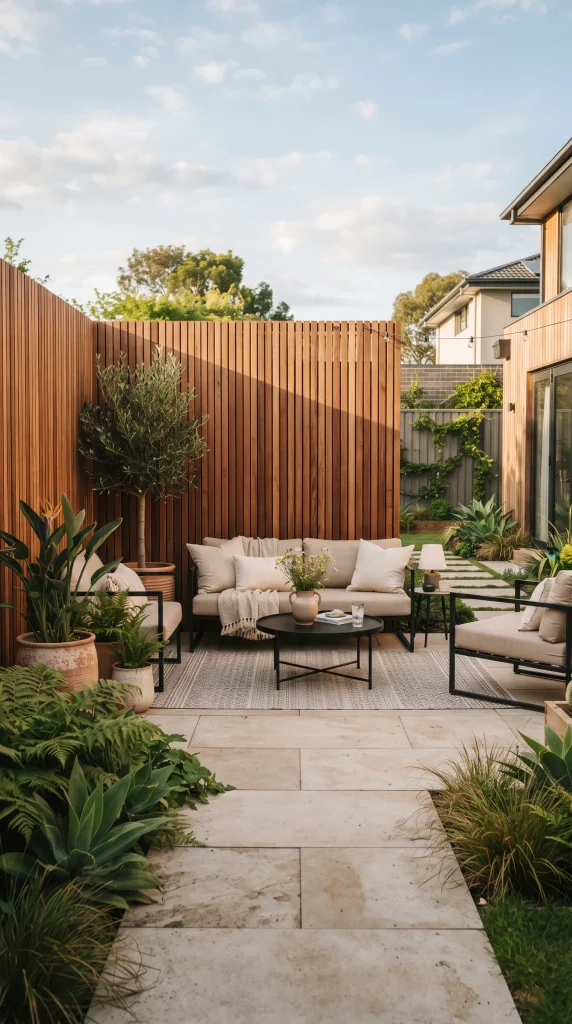
BEFORE:
An exposed backyard can feel uncomfortable when neighboring windows, fences, or nearby buildings remain visible from the seating area. Tall solid fencing may also make a small space feel enclosed.
AFTER:
Slatted privacy panels block selected sightlines while allowing light and airflow through the gaps. Position them only where privacy is needed, then soften the base with grasses, shrubs, or climbing plants.
Privacy panels work best when they solve a specific sightline rather than surrounding the entire yard. Measure the viewing angle from your seating position before installing them. For a modern finish, repeat the panel’s wood tone or dark metal finish in nearby furniture, planters, or lighting fixtures.
Concrete Planter Borders

- Map the border: Mark the edges around the lawn, patio, or pathway before purchasing planters.
- Choose consistent shapes: Use long rectangular containers to reinforce a clean contemporary layout.
- Check drainage: Make sure each planter has suitable drainage openings and a stable base.
- Layer the planting: Combine taller grasses at the back with compact flowering plants toward the front.
- Repeat materials: Match the concrete tone with nearby paving or architectural elements.
Concrete planters create a strong boundary without needing a traditional garden bed. They are especially useful for separating a lawn from seating or defining a walkway. Keep planting heights varied, but repeat foliage colors throughout the yard. This gives the landscape structure while keeping the overall design calm and cohesive.
Wood Deck Platform

| Design Choice | Option A | Option B |
| Surface | Natural timber decking | Composite decking |
| Appearance | Warm, organic grain | Consistent modern finish |
| Maintenance | Requires regular care | Generally lower maintenance |
| Best Use | Natural garden settings | Busy outdoor living areas |
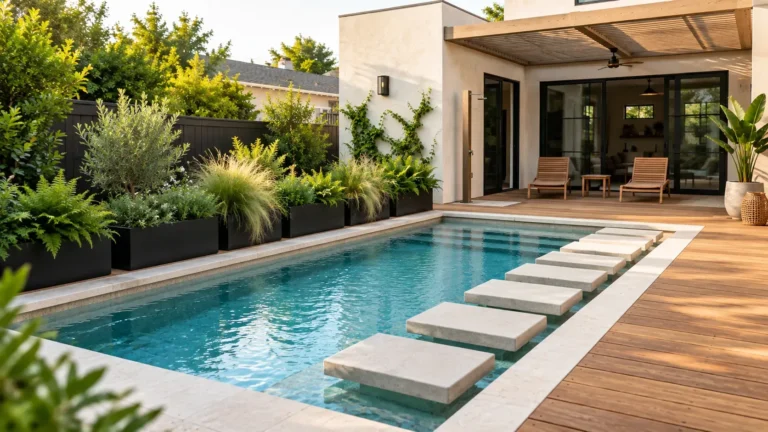
A deck can establish a dedicated outdoor living zone while visually separating furniture from the surrounding planting. Choose boards with good outdoor durability and plan adequate drainage beneath the structure. In my experience, keeping the deck slightly larger than the furniture footprint prevents the area from feeling crowded.
Outdoor Kitchen Setup
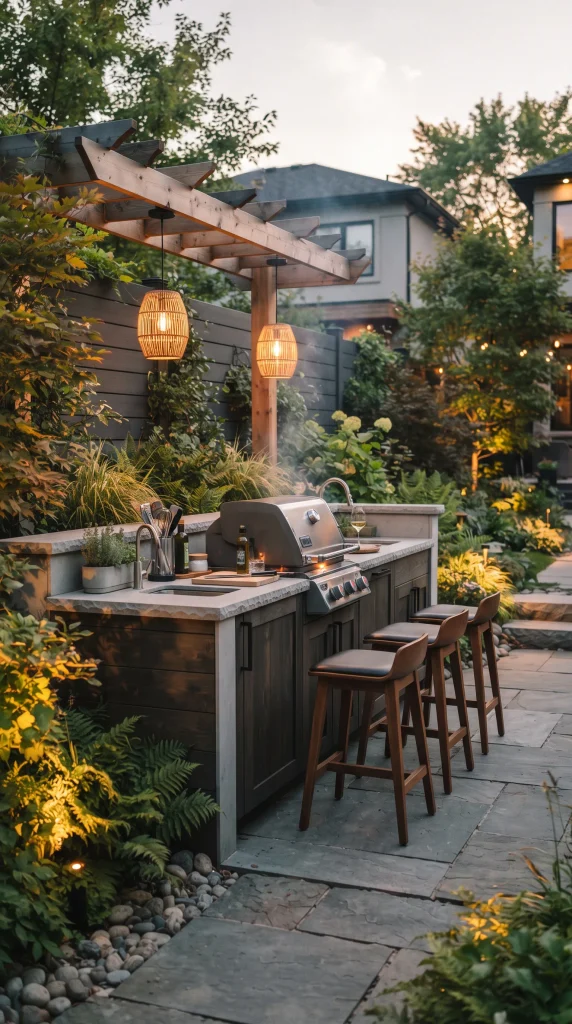
DO:
- Place the cooking station close to the main dining area.
- Include weather-resistant storage for frequently used outdoor equipment.
- Use durable countertop materials that tolerate heat and outdoor conditions.
- Provide adequate task lighting around grills, sinks, and preparation surfaces.
DON’T:
- Don’t position the grill directly beneath low branches or combustible structures.
- Don’t block the main pathway with cabinets or appliances.
- Don’t overlook ventilation around enclosed cooking areas.
- Don’t choose materials without checking their outdoor durability.
An outdoor kitchen works best when its layout follows the same practical flow as an indoor kitchen. Keep preparation, cooking, serving, and cleanup areas within easy reach. For smaller yards, a straight counter with a grill and storage can provide useful function without consuming the entire patio.
Layered Pathway Lighting
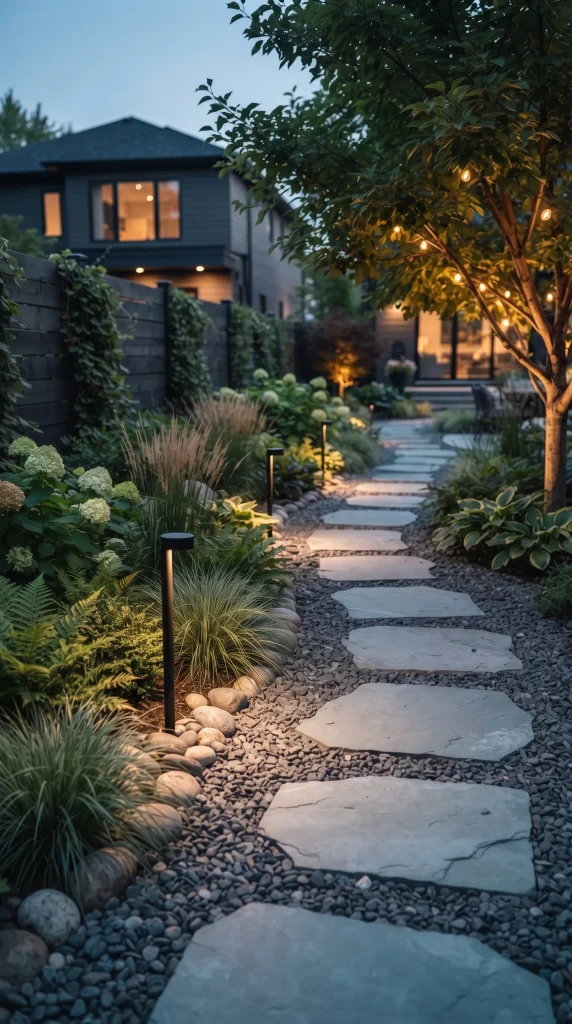
Cost: Moderate | Time: One afternoon | Skill Level: Beginner
Best For: Walkways, garden borders, and entertaining areas
Lighting: Warm, low-level illumination for evening visibility
Result: Safer paths with stronger landscape definition
Well-placed pathway lights make a backyard easier to navigate after dark while highlighting its structure. Space fixtures evenly along walkways rather than clustering them together. For modern backyard design ideas for a stylish outdoor space, choose simple black or brushed-metal fixtures that complement existing furniture and architectural finishes.
CONCLUSION
A stylish backyard does not require a complete renovation. The right combination of seating, greenery, lighting, pathways, shade, and defined zones can make an outdoor area feel far more useful and inviting. These backyard design ideas give you practical starting points you can adapt to your space, budget, and lifestyle.
Start with one improvement, such as a defined patio, layered planting, or warm lighting, then build from there. I’ve seen how small changes can completely shift the way an outdoor space feels. Save this post on Pinterest, try your favorite ideas, and share it with someone planning a backyard makeover.