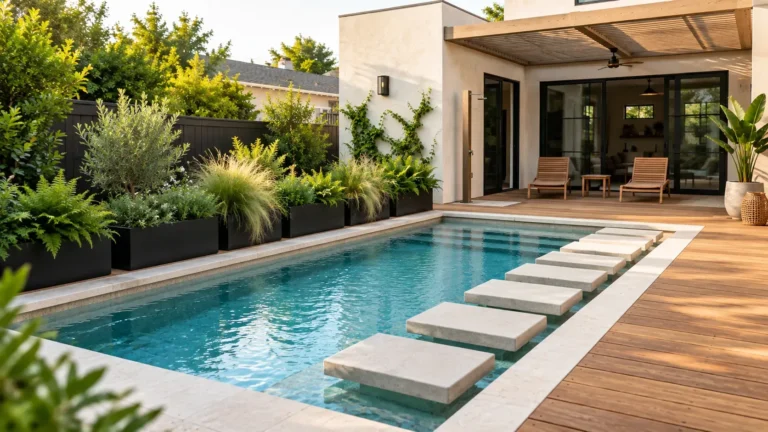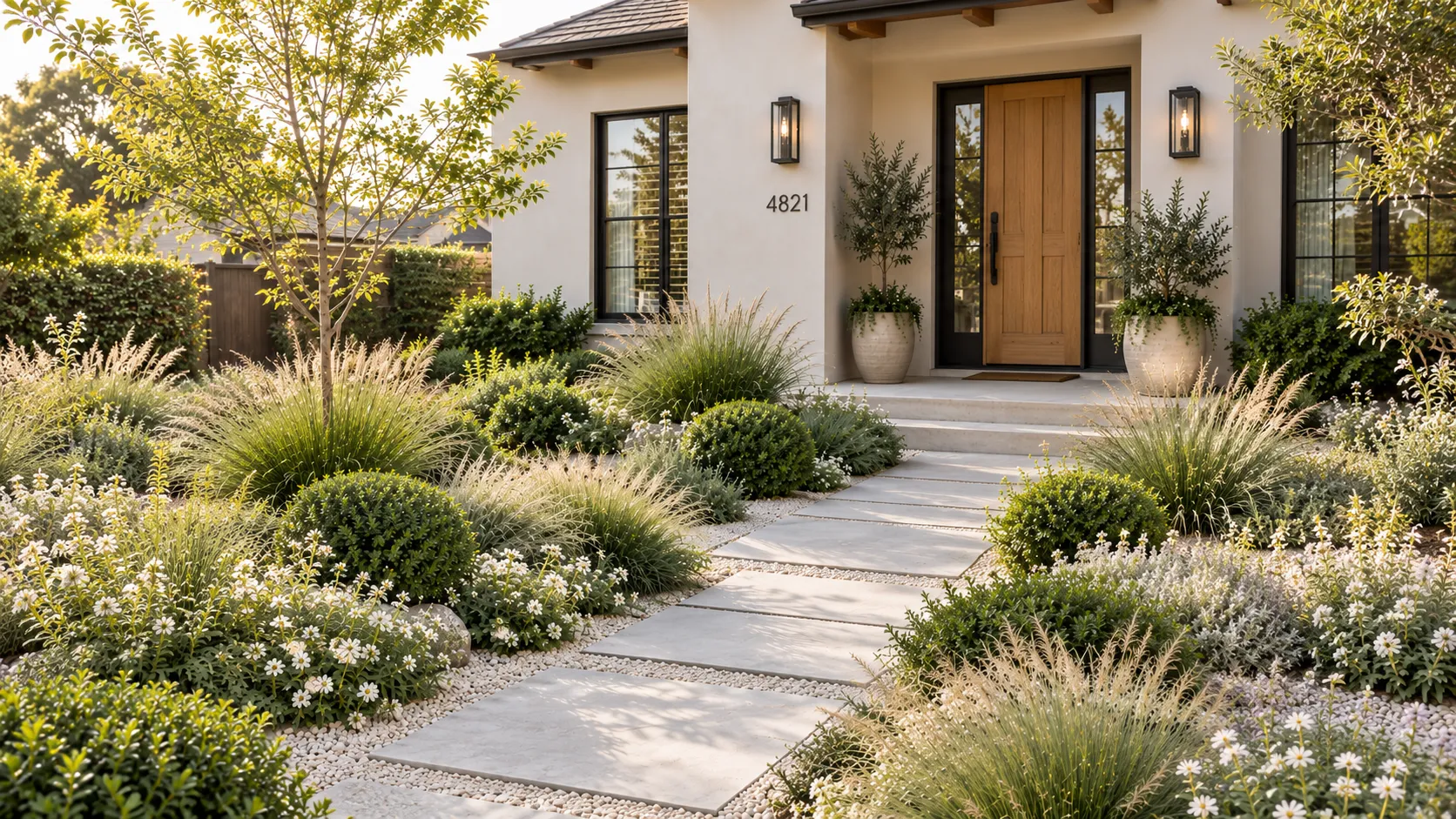
18 Easy Grass-Free Front Yard Landscaping Ideas
A beautiful front yard does not need a traditional lawn to feel welcoming. Grass free front yard landscaping ideas can help you create a stylish entrance with less mowing, watering, and routine upkeep.
From gravel paths and layered shrubs to native plants, stone features, and container displays, there are plenty of practical ways to replace grass while keeping your yard inviting. These ideas work for small entrances, narrow planting strips, and larger front yards that need a fresh layout.
In my experience, the best lawn-free designs combine a few dependable materials with plants suited to the local conditions. That makes the space easier to maintain while giving it plenty of visual interest. Whether you want a modern, natural, or cottage-inspired look, these ideas can help you choose a setup that fits your home, budget, and lifestyle.
Gravel Garden Beds

Gravel creates a tidy foundation that replaces large areas of thirsty lawn while giving plants room to stand out. Choose angular gravel in a soft neutral shade, then define the edges with steel, stone, or brick. The finished surface feels intentional rather than unfinished.
For a polished look, repeat the same gravel throughout the front yard instead of mixing several colors. Add clusters of drought-tolerant plants at different heights for texture. I’ve noticed that keeping the plant palette limited makes gravel landscaping look more cohesive and reduces ongoing maintenance.
Stepping Stone Path
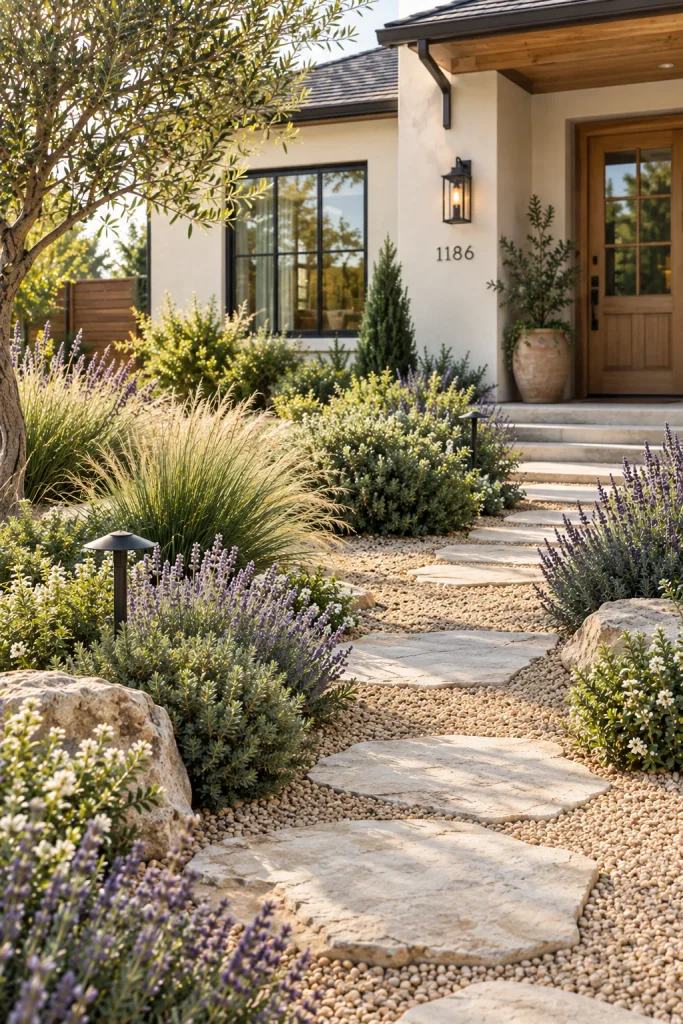
- Choose stones large enough for comfortable, stable footsteps.
- Space each stone according to a natural walking stride, usually about 18 to 24 inches apart.
- Set stones firmly into compacted gravel so they do not rock underfoot.
- Keep planting low beside the path to preserve a clear walking route.
- Repeat one stone type throughout the yard for a connected appearance.
A defined walkway gives a small front yard structure without needing a carpet of turf. Use gravel or decomposed granite between the stones, then soften the edges with ground covers and compact shrubs. This setup works especially well near porch steps because it naturally guides visitors toward the entrance.
Native Plant Border
Quick Tip:
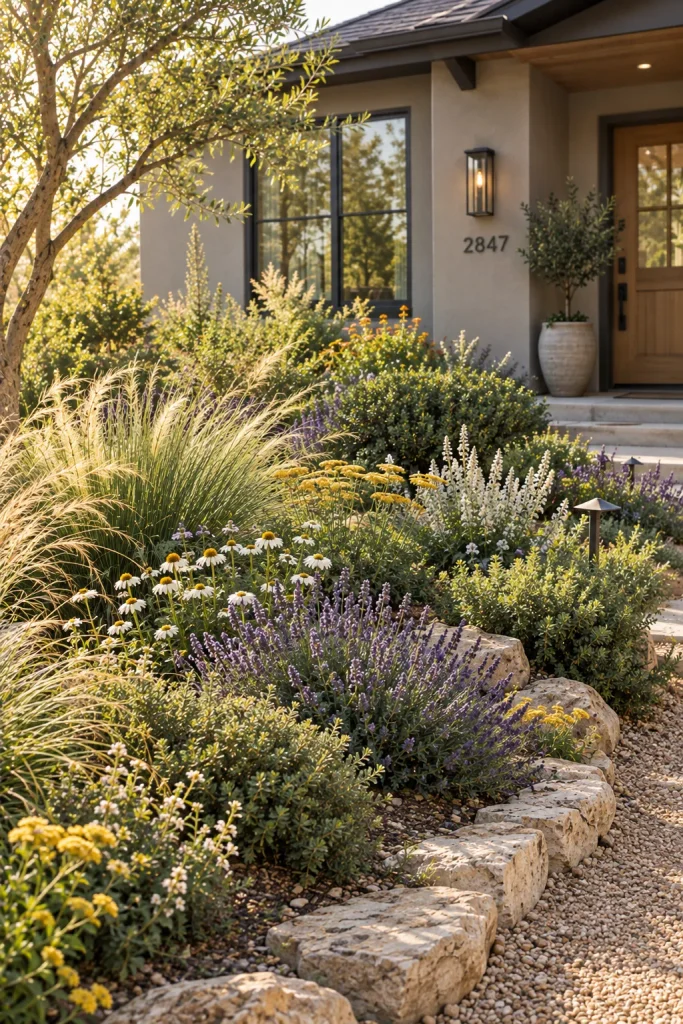
Group plants according to their mature size rather than their container size. Leave enough space for airflow and growth, then cover exposed soil with a thin layer of mulch. This prevents a newly planted border from becoming crowded after one or two growing seasons.
A native plant border brings color, movement, and seasonal interest to a lawn-free entrance. Select species suited to your local rainfall, soil, and sunlight rather than choosing plants only for appearance. Once established, well-matched plants generally need less supplemental watering than poorly suited varieties. The result feels natural while staying organized.
Mulched Planting Beds

BEFORE: Bare soil and scattered plants leave the front yard looking unfinished. Weeds can quickly appear between plants, especially after rain and during warm growing periods.
AFTER: A defined layer of organic mulch creates a clean surface around the plants. The yard looks more intentional, while the mulch helps retain soil moisture and reduces exposed areas where weeds can establish.
A mulch bed works best when its shape follows the natural lines of the house, walkway, or driveway. Keep mulch a few inches away from plant stems and tree trunks to prevent moisture-related problems. In my experience, broad, gently curved beds also make a small yard feel more spacious.
Raised Stone Planters
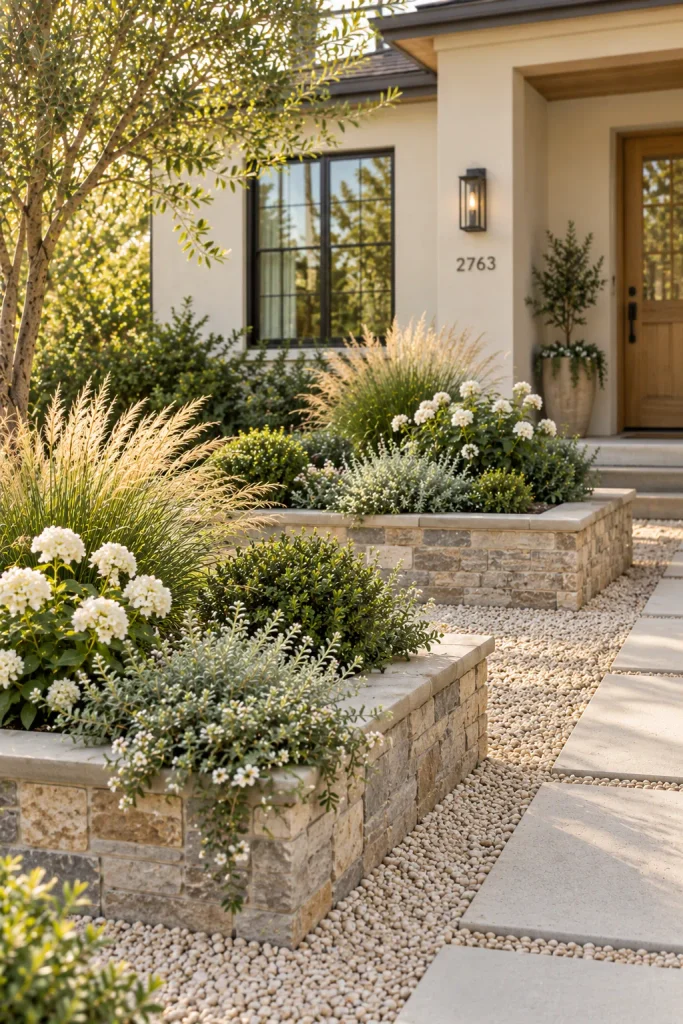
- Choose the location: Position planters where they can frame the entry, driveway, or front windows without blocking access.
- Build a stable base: Prepare level ground and use properly fitted stone or masonry blocks designed for outdoor landscaping.
- Fill strategically: Add quality planting soil, leaving enough space below the rim for watering without overflow.
- Layer the plants: Place taller shrubs toward the back and smaller flowers or ground covers near the front.
- Finish the edges: Check that every planter has a clean, stable top edge and adequate drainage.
Raised planters add height when a lawn-free yard feels too flat. They also make plant groupings easier to organize and maintain. Choose materials that repeat existing features, such as a stone porch or brick walkway, so the planters feel connected to the home’s exterior rather than added as separate pieces.
Gravel And Pavers

| Comparison | Option A | Option B |
| Surface | Loose gravel | Large pavers |
| Walking comfort | Best for casual paths | Better for frequent foot traffic |
| Maintenance | Easy to rake and refresh | Requires stable leveling |
| Style | Relaxed and natural | Clean and structured |
| Best use | Open planting areas | Entry paths and gathering zones |
Combining these two surfaces gives a front yard useful structure without relying on turf. Use pavers where people regularly walk and gravel around planting beds. Keep the materials within a similar color family, then repeat them near the porch or driveway for a unified finish.
Rock Garden Clusters

DO:
- Group rocks in uneven clusters rather than scattering single stones everywhere.
- Place larger boulders first, then add smaller rocks around their bases.
- Choose plants that tolerate the same sunlight and watering conditions.
- Leave enough open space for the shapes of individual rocks to remain visible.
DON’T:
- Mix too many rock colors in one small yard.
- Bury large stones completely in the soil.
- Pack plants tightly between rocks.
- Use sharp-edged stone beside frequently used walkways.
Rock clusters bring strong texture to a yard with very little planting area. Start with a few substantial stones and build the planting around them instead of filling every open space. I’ve seen this work especially well in sunny entrances where drought-tolerant plants and stone can create structure without demanding frequent watering.
Ornamental Grass Pockets

Cost: Moderate | Time: One planting day | Skill Level: Beginner
Best For: Sunny front yards | Water Needs: Low to moderate
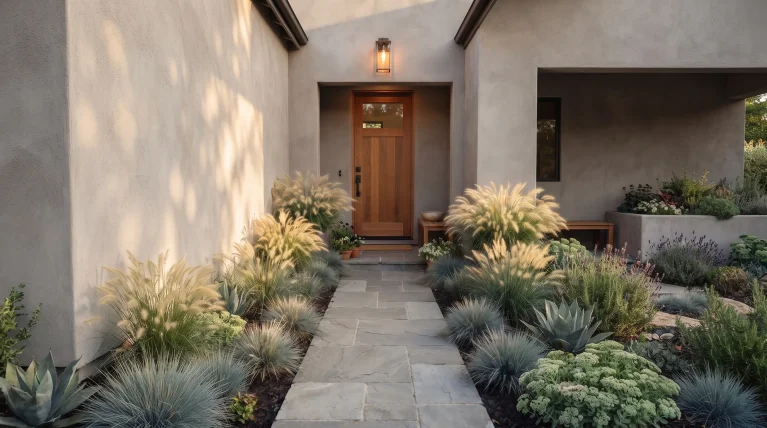
Result: Soft movement and year-round structure
Ornamental grasses can replace the visual softness of a lawn while using far less space as a continuous planting surface. Select varieties suited to your climate and mature height. Place taller grasses farther from paths and windows, then use shorter clumps near borders so the entrance stays open and easy to navigate.
Creeping Ground Covers

A soft carpet of ground cover can fill spaces where traditional turf would normally sit, without creating a uniform lawn. Choose plants according to your climate, soil, foot-traffic level, and sunlight. For paths, select varieties that tolerate occasional stepping, and use stones to protect the planting from regular traffic.
Ground covers are especially useful around established trees, along borders, and between larger landscape features. Give them enough room to spread naturally, but define their boundaries with edging so they do not creep into driveways or paths. Regular trimming during establishment keeps the planting controlled and tidy.
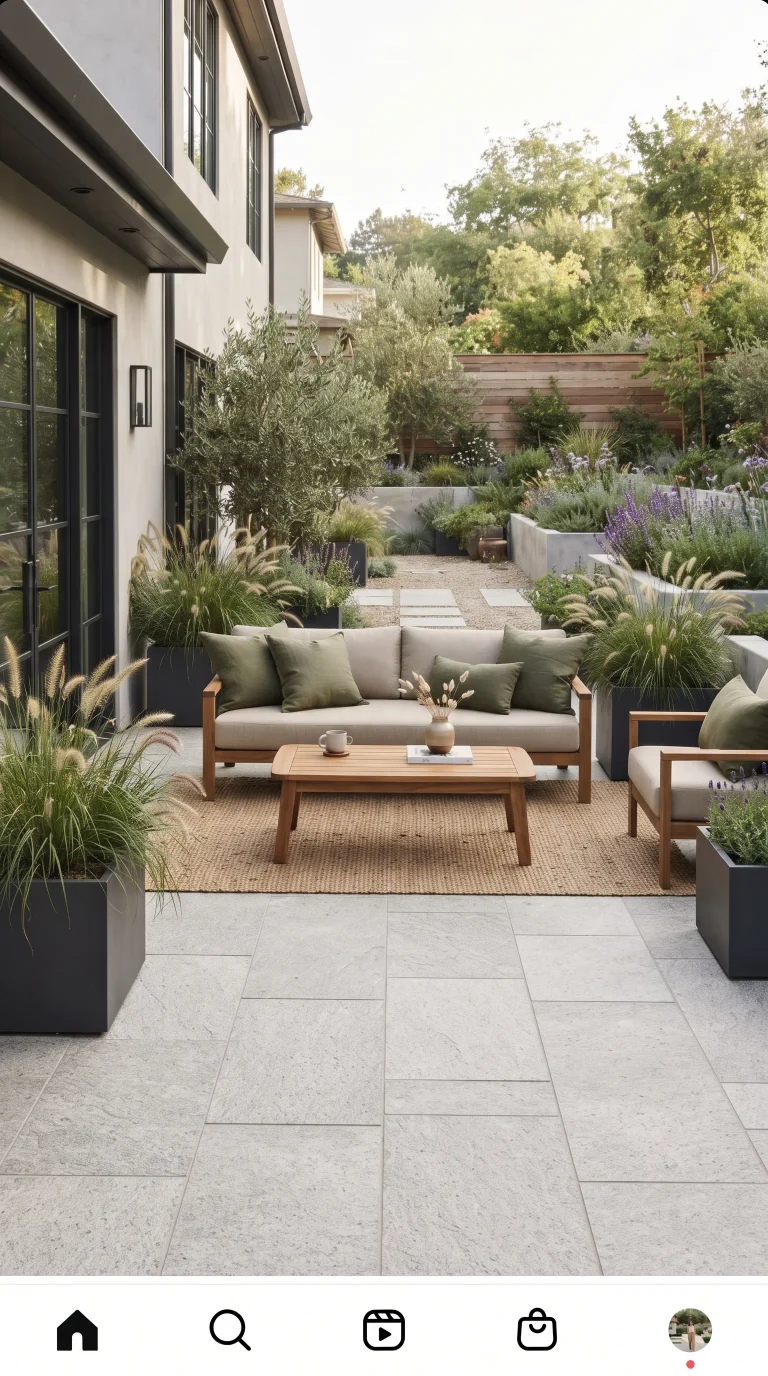
Gravel Seating Nook
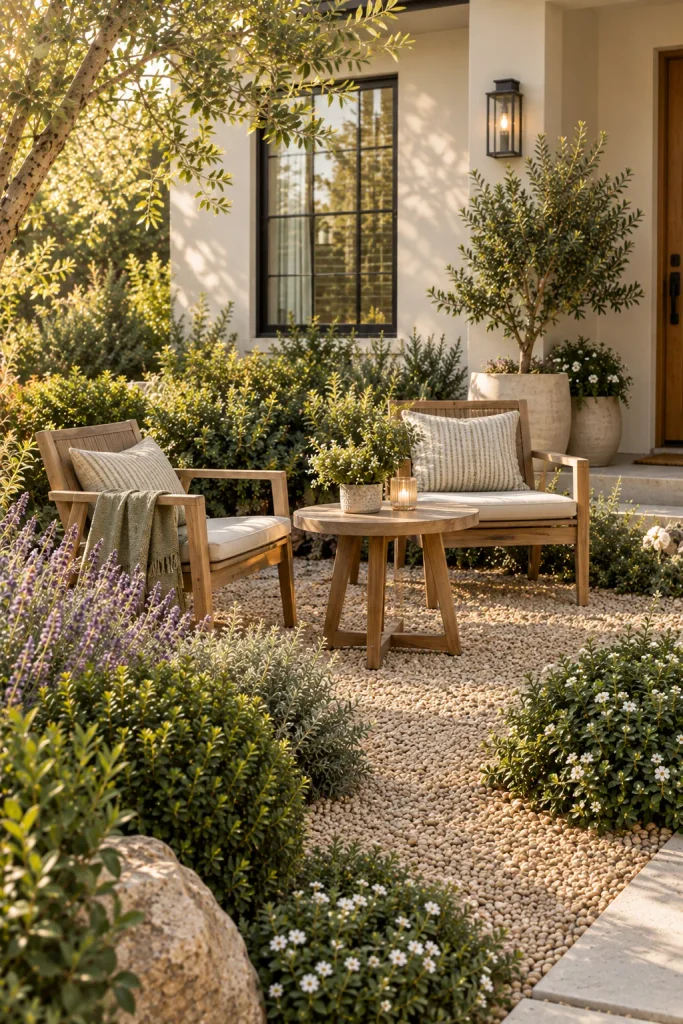
- Place the seating area on compacted gravel for a stable, low-maintenance surface.
- Add a small outdoor rug only if it can dry quickly after rain.
- Position chairs where they do not obstruct the main entrance path.
- Use containers with seasonal flowers to add flexible color.
- Repeat the gravel color elsewhere in the yard for visual continuity.
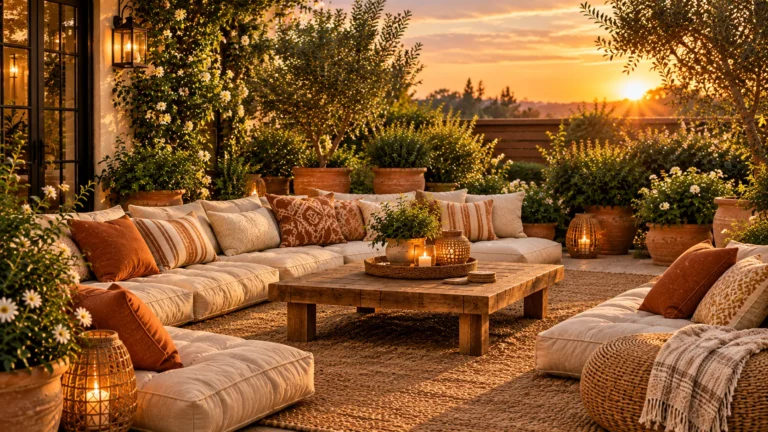
A small seating nook can give a lawn-free front yard a useful purpose beyond curb appeal. Choose compact furniture that leaves generous walking space around it. A simple pair of chairs near the porch can create a pleasant morning coffee spot without requiring a large paved patio or extensive construction.
Layered Shrub Beds

Quick Tip:
Plan the planting from tallest to shortest before buying anything. Place the mature-height shrubs toward the back, medium plants in the middle, and low ground covers along the edge. Check each plant’s expected width too, because crowded beds often require unnecessary pruning later.
Layered shrubs provide structure through multiple seasons and can fill a large lawn-free area without making the yard look empty. Mix evergreen forms with a few flowering varieties for changing color and texture. Leave deliberate pockets of mulch or gravel between groups so each layer remains visible as the plants mature.
Stepping Stone Matrix
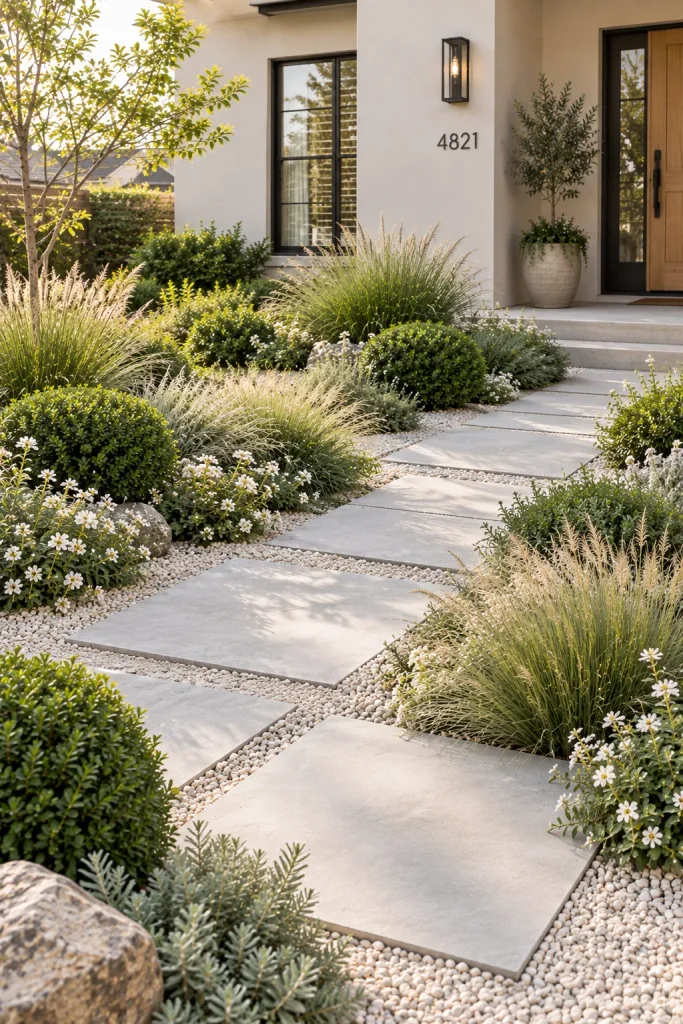
BEFORE: A broad bare area between the driveway and porch can feel disconnected and difficult to navigate. Loose gravel alone may also become scattered onto nearby paths after regular foot traffic.
AFTER: A grid of large stepping stones creates a clear route while keeping most of the ground covered with low-maintenance material. Plants can fill the spaces around the stones without crowding the walking surface.
Keep the spacing consistent enough to feel intentional, but avoid making the layout overly rigid if your home has a relaxed architectural style. Set each paver on a properly prepared base so it stays level. This approach works particularly well for wide side-to-front transitions where a conventional walkway would feel too formal.
Decorative Stone Edging
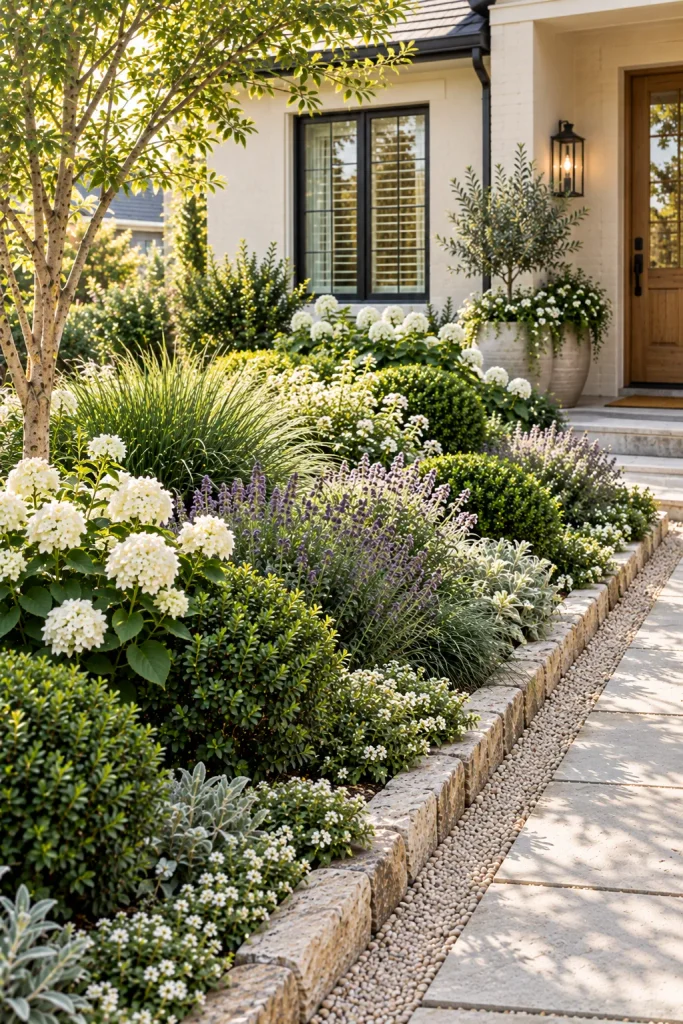
- Mark the border: Lay out the desired edge with a garden hose or marking paint before digging.
- Prepare the trench: Remove loose soil and create a shallow, level channel for the stones.
- Set the edging: Place stones tightly together, keeping their tops at a consistent height.
- Secure the border: Backfill firmly on both sides so the stones stay stable after rain and foot traffic.
A defined edge keeps gravel, mulch, and planting areas from blending together over time. Choose stones that complement your home’s existing exterior materials, then repeat the same edging around several beds. The result is a cleaner-looking landscape with less loose material spilling onto paths, driveways, and entrance areas.
Decomposed Granite Paths

| Feature | Option A: Decomposed Granite | Option B: Concrete |
| Appearance | Natural and softly textured | Smooth and structured |
| Installation | Requires compacted layers | Usually more permanent |
| Drainage | Allows some water infiltration | Depends on surface design |
| Flexibility | Easy to reshape or extend | Changes require more work |
| Best Use | Informal garden paths | Formal entry routes |
Decomposed granite gives a front yard a warm, natural surface while keeping the design visually lighter than a large concrete area. Install it over a properly prepared base and compact each layer thoroughly. Use edging along both sides to prevent the material from migrating into planting beds or nearby drainage areas.
Wood Chip Courtyard

DO:
- Use a clean, consistent wood chip material across the main area.
- Keep chips away from direct contact with tree trunks and plant stems.
- Add stepping stones through areas that receive regular foot traffic.
- Refresh thin or compacted areas as the material breaks down.
DON’T:
- Use untreated construction debris as landscape mulch.
- Pile wood chips against foundations or siding.
- Cover drainage grates or irrigation access points.
- Create deep piles where people need to walk comfortably.
Wood chips can cover large open areas while adding a warm, organic texture around plants. They work especially well beneath established trees or around a simple bench. Keep the layer moderate and monitor it seasonally. For entrances with frequent traffic, combine chips with durable stepping stones to create a more stable route.
Rain Garden Basin
Cost: Moderate | Time: One to three days | Skill Level: Intermediate
Best For: Rain-prone areas | Works In: Sunny or partly shaded locations
Result: Better water management and seasonal planting interest
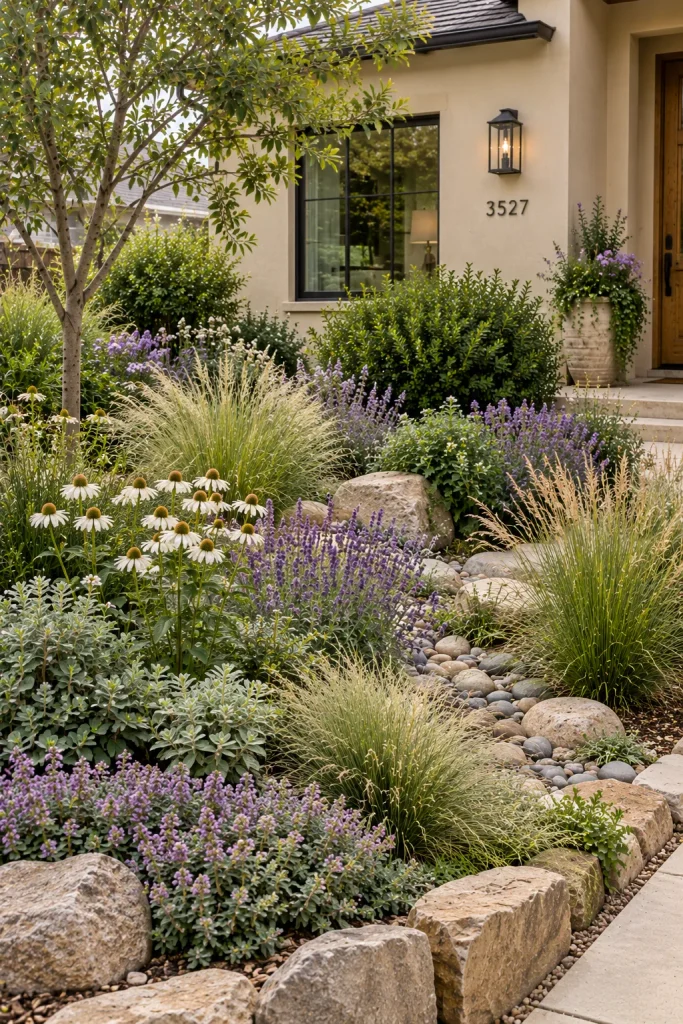
A shallow rain garden can turn a problem area where water collects into a useful landscape feature. Choose plants that tolerate both occasional wet soil and dry periods between storms. Shape the basin away from the foundation and confirm local drainage requirements before digging, especially near buildings or underground utilities.
Curbside Plant Strip

A narrow strip beside the sidewalk can become one of the most useful areas in a lawn-free landscape. Choose plants that stay within their mature boundaries and leave enough clearance for pedestrians, vehicles, and visibility. Keep the planting low near driveways and intersections so the finished border stays safe as well as attractive.
For extra structure, alternate small shrubs with groups of three or five flowering plants instead of placing individual specimens at random. A repeated pattern makes a narrow space feel intentional. I’ve noticed that this approach also makes future replacements easier because each plant has a clear place within the overall design.
Container Plant Display
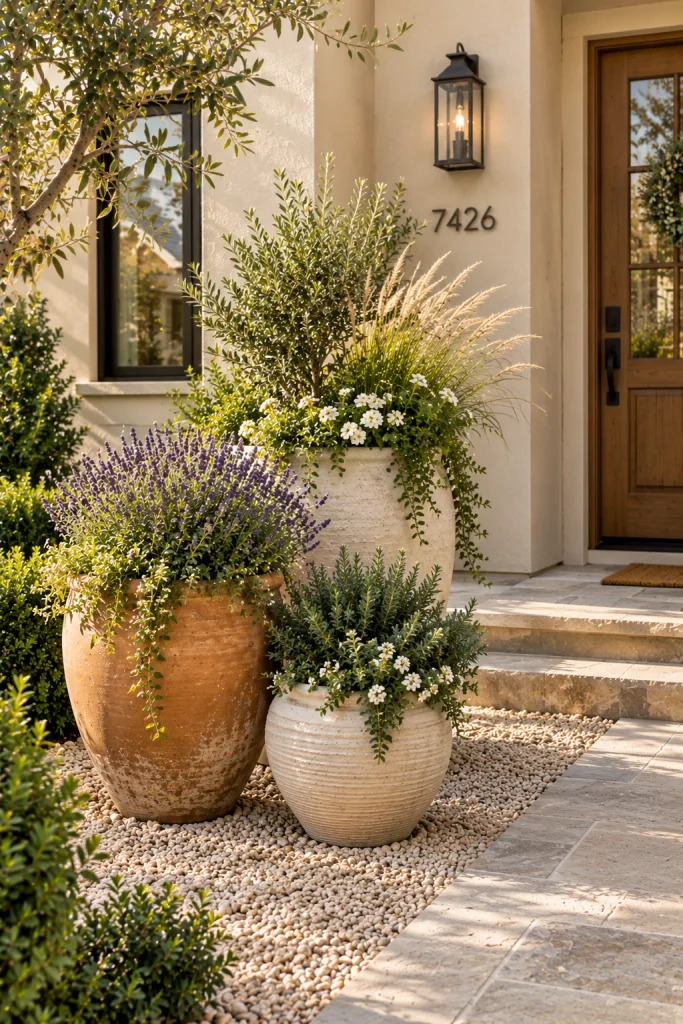
- Choose substantial containers: Select weather-resistant pots large enough to support mature plants without tipping.
- Create height: Place the tallest container near the entry or against a wall, with shorter pots stepping downward.
- Mix plant forms: Combine upright foliage, rounded leaves, and trailing plants for varied texture.
- Protect drainage: Use pots with drainage holes and raise them slightly if water needs to escape freely.
- Group thoughtfully: Keep containers close enough to read as one display while leaving the walkway unobstructed.
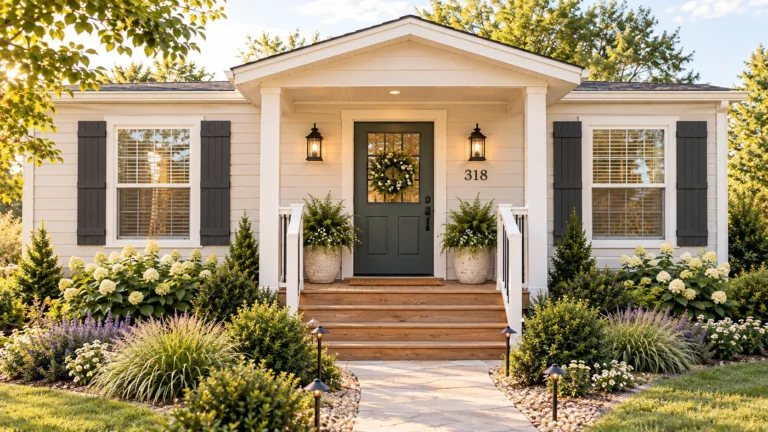
Containers are useful when you want flexible color without permanently changing the ground. They can frame a doorway, fill an awkward corner, or add seasonal flowers to a gravel-covered yard. Choose a limited pot color palette and repeat it near the entrance for a finished, coordinated appearance.
Conclusion
Replacing a traditional lawn can make your front yard more useful, distinctive, and manageable. The right mix of gravel, pavers, native plants, shrubs, mulch, stone, and containers can create structure without demanding constant mowing or watering.
Use these grass free front yard landscaping ideas as inspiration, then start with one manageable area rather than tackling the entire yard at once. I’ve seen how small changes like a defined planting bed or simple stone path can completely shift the way an entrance feels.
Save this post on Pinterest so you can return to your favorite ideas, try one that suits your space, and share it with someone planning a lawn-free yard.