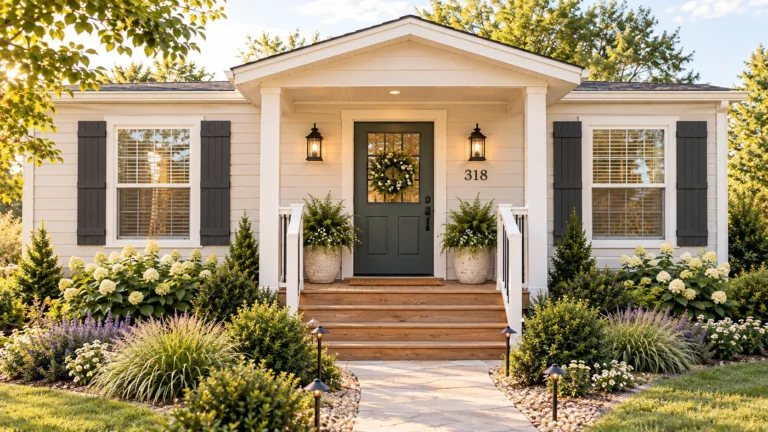
16 Small Pool Design Ideas for a Relaxing Backyard Retreat
A small backyard can still become a beautiful place to swim, relax, and unwind. Small pool design ideas can help you make every corner count without making the space feel crowded.
Whether your yard is narrow, compact, or simply short on usable space, the right pool layout can create a comfortable outdoor retreat. Smart choices such as built-in seating, vertical privacy screens, warm decking, layered greenery, and simple lighting can add function without overwhelming the area.
This collection brings together 16 practical ideas to help you plan a pool that suits your space and lifestyle. In my experience, the best compact pool designs focus on balance rather than size. A thoughtful layout, comfortable surroundings, and carefully chosen materials can make even a modest backyard feel inviting and complete.
Compact Plunge Pool
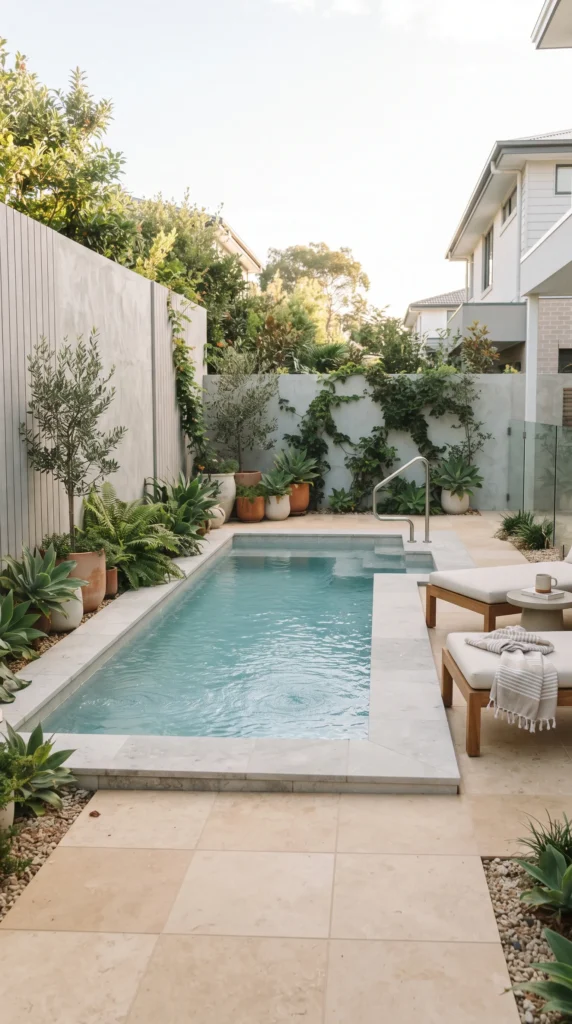
A compact plunge pool makes smart use of limited backyard space without crowding the surrounding area. Keep the pool shape simple, preferably rectangular or square, so every inch has a clear purpose. A narrow coping edge can provide enough room for maintenance while keeping the layout visually clean and organized.
I’ve noticed that smaller pools feel more spacious when the surrounding deck stays uncluttered. Choose two comfortable loungers instead of filling the area with furniture. Add greenery along one edge for privacy, then leave open walking space around the water. The result feels calm rather than cramped.
Compact Plunge Pool

- Build the bench along the shortest pool wall to preserve swimming space.
- Use matching stone or tile so the seating feels integrated with the pool.
- Add removable outdoor cushions nearby for flexible lounging.
- Keep the bench deep enough for comfortable sitting without reducing pool circulation.
- Place shade plants or a slim umbrella close to the seating zone.
A built-in bench gives a compact pool more than one purpose. It creates a place to sit, cool your feet, or enjoy a drink without requiring extra chairs beside the water. For smaller yards, this approach keeps furniture to a minimum while making the pool area more practical for everyday use.
Warm Wood Decking

Quick Tip:
Choose weather-resistant decking with a textured surface for better grip around wet areas. Keep the boards running in the same direction as the pool to create longer visual lines and make the yard feel more open.
Warm wood decking can soften the harder surfaces around a swimming area while adding a natural outdoor feel. Select medium or light wood tones when the yard is small because darker finishes may visually shrink the space. Leave a narrow planting strip beside the deck for greenery without sacrificing useful floor area.
Corner Pool Layout

Before, a small backyard can feel awkward when the pool sits directly in the middle and interrupts the main walking path. Furniture may need to squeeze around it, leaving little room for movement or planting.
After, placing the pool into a corner creates a clear open zone for seating, plants, or outdoor dining. The remaining space feels more organized because the pool becomes one defined area instead of dominating the entire yard.
Corner placement works especially well in narrow yards where circulation matters. Keep the pool parallel to the longest boundary whenever possible, then use the freed-up area for a compact dining set or planting bed. In my experience, this arrangement makes small outdoor spaces feel noticeably easier to use.
Slim Lap Pool

- Measure the longest boundary: Use the narrowest practical width while keeping enough surrounding clearance for safe movement.
- Keep the shape straight: A simple rectangular layout uses limited space more efficiently than curved edges.
- Add slim coping: Choose a narrow border in stone or concrete to preserve usable deck space.
- Keep furniture minimal: Position one or two loungers at the end rather than along both sides.
- Add vertical greenery: Use tall planters or narrow planting beds to soften walls without consuming much floor area.
A slim lap pool gives a narrow backyard a strong architectural feature while preserving valuable walking space. Choose long, clean lines and avoid bulky furniture around the edges. A simple palette of stone, wood, and greenery keeps the area cohesive. This setup suits homeowners who prefer swimming space over a large lounging zone.
Natural Stone Surround
| Feature | Option A: Basic Paving | Option B: Natural Stone |
| Look | Clean and uniform | Textured and organic |
| Maintenance | Usually simpler | May need periodic sealing |
| Texture | Smooth and consistent | Naturally varied |
| Style | Modern and minimal | Warm and character-rich |
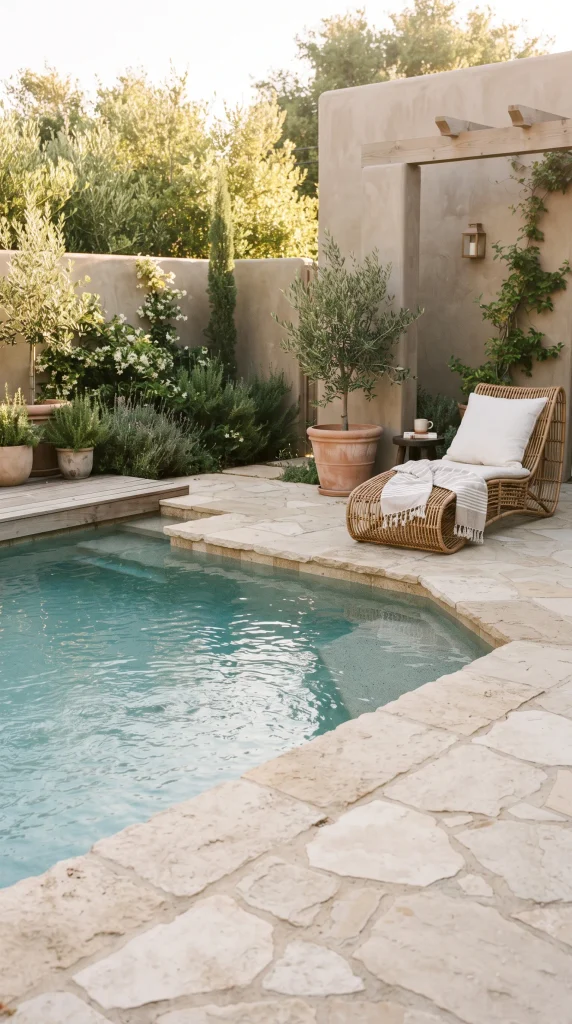
Natural stone adds texture around a compact pool without requiring decorative clutter. Choose lighter shades to reflect sunlight and keep the area visually open. For wet zones, prioritize surfaces with suitable slip resistance rather than choosing solely for appearance. The right stone can make a small swimming area feel connected to the surrounding landscape.
Layered Greenery
DO:
- Plant taller greenery along the back boundary for privacy.
- Use low plants near the pool edge to maintain clear sightlines.
- Choose foliage with different heights and textures.
- Leave enough space between plants for airflow and maintenance.
DON’T:
- Plant thorny species beside walking areas.
- Use large trees that may overwhelm a compact yard.
- Let dense foliage block pool access.
- Choose plants without checking their water and sunlight needs.
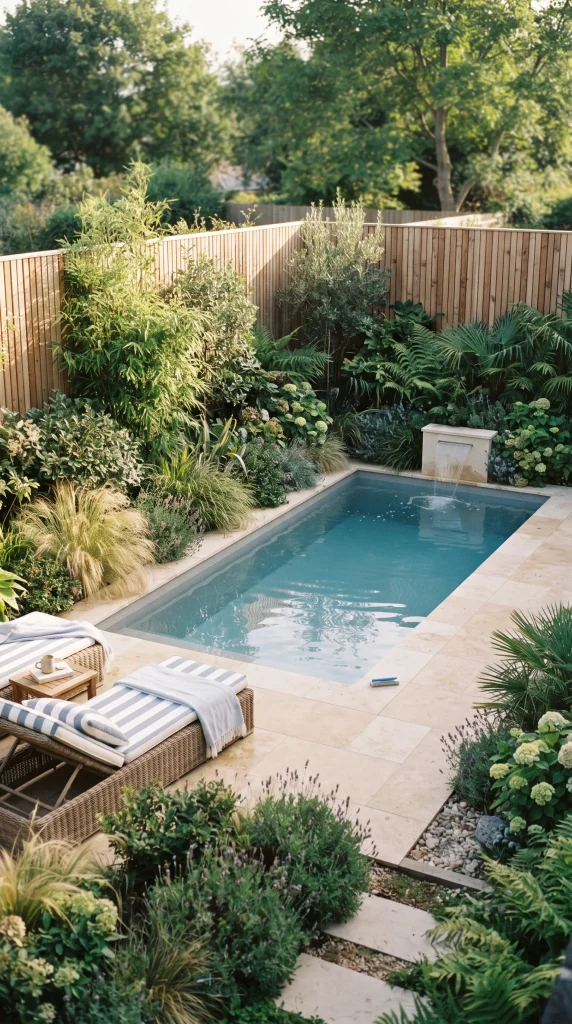
Layered planting can make a compact swimming area feel greener without consuming the whole yard. Combine one taller screen plant with medium shrubs and low groundcover for depth. I’ve seen this approach work especially well beside plain fences because the varied foliage breaks up hard surfaces while keeping the pool visually connected to nature.
Raised Pool Edge
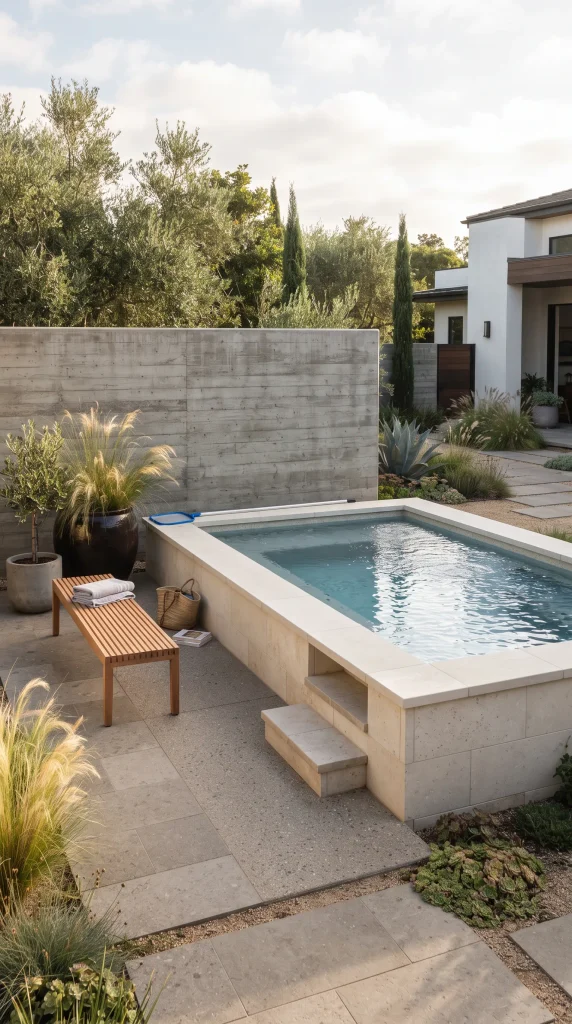
Cost: Moderate to high | Time: Several weeks for professional construction | Skill Level: Professional installation
Best For: Sloped or uneven yards | Style: Modern architectural | Result: Strong visual definition
A raised edge can give a compact pool a distinctive architectural presence while helping define the boundary between water and patio. The elevation should be planned carefully around drainage, access, and local building requirements. Pair the structure with simple paving and limited furniture so the raised form remains the main feature.
Neutral Pool Palette
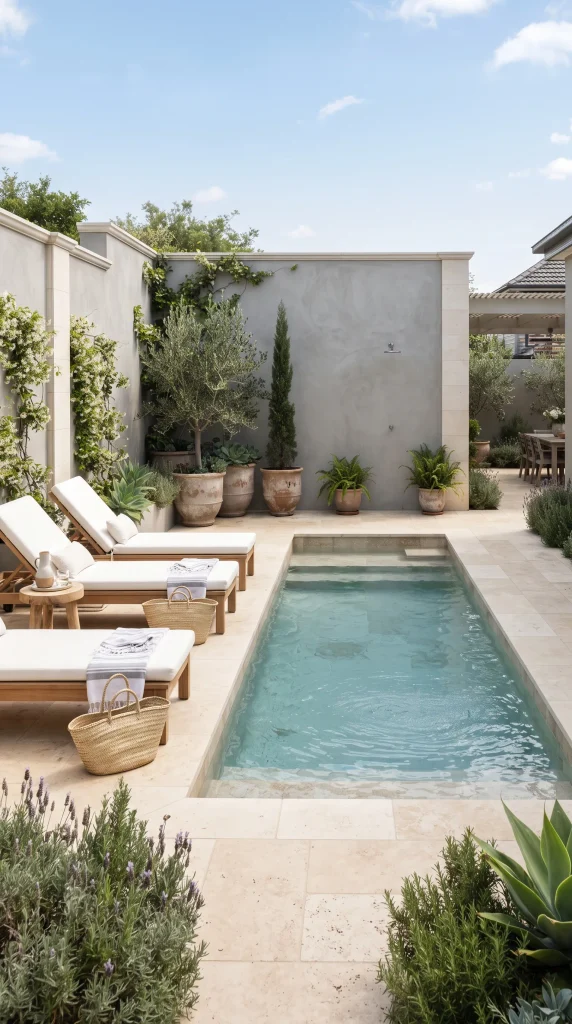
The right color palette can make a small pool area feel surprisingly open. Start with one light base color, such as warm limestone or soft gray, then introduce natural wood and restrained greenery. Avoid mixing too many strong colors because visual contrast can make a compact outdoor area appear busier and smaller.
For the waterline, choose tiles that complement the surrounding surfaces instead of competing with them. Light neutrals reflect daylight and create a relaxed appearance, while a few darker accents can add definition around steps or seating. Keep cushions and accessories within the same tonal family for a polished finish.
Floating Deck Steps
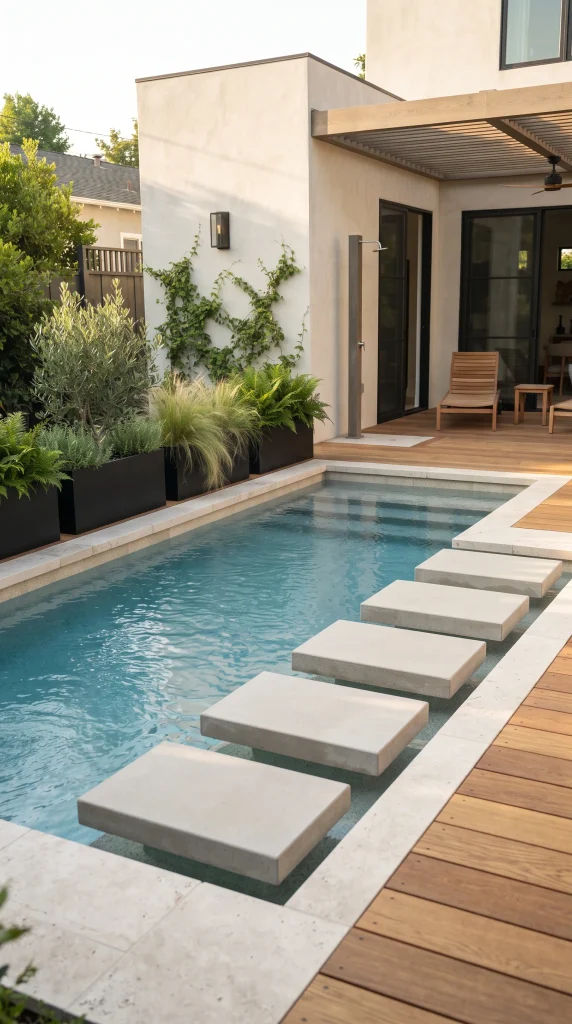
- Position the entry steps along one short side to preserve the main swimming area.
- Use wide, shallow steps for easier entry and comfortable sitting.
- Match the step finish with the pool coping for a unified appearance.
- Add a small textured mat nearby to help manage wet footprints.
A well-planned entry can make a compact pool much easier to use every day. Wide steps also create an informal sitting spot without adding furniture. Keep the surrounding deck clear so wet areas remain easy to clean and people can move safely around the pool.
Vertical Privacy Screen
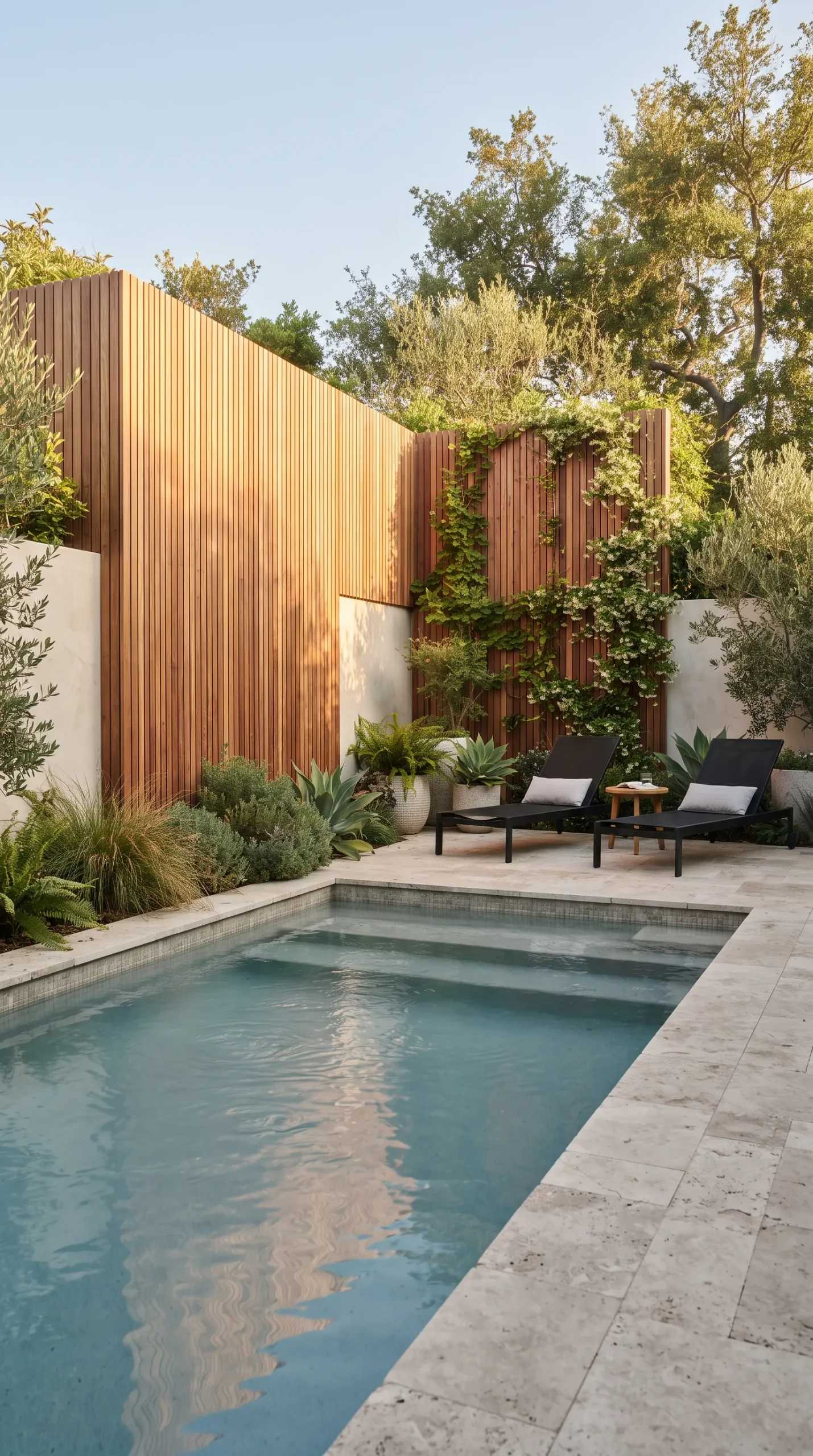
Cost: Moderate | Time: One to three days for a simple screen | Skill Level: Beginner to intermediate
Best For: Exposed backyards | Materials: Wood, composite, or metal | Result: More privacy with minimal floor space
A vertical screen provides privacy without taking valuable ground space from a compact pool area. Position it along the most exposed boundary, then soften the structure with climbing plants or narrow planters. Leave enough clearance for maintenance and airflow. This approach works particularly well beside neighboring homes or busy walkways
Sunken Lounge Nook
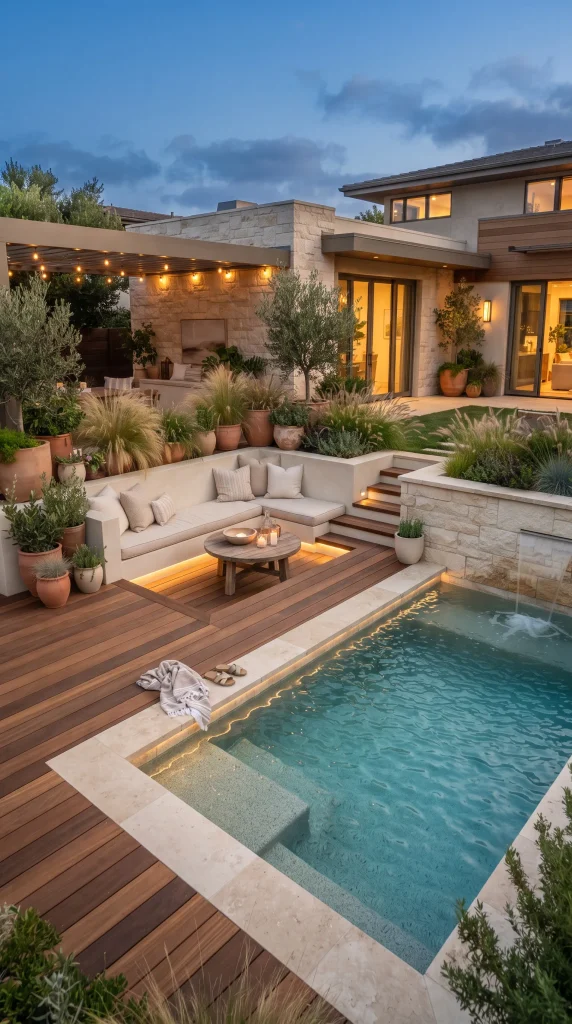
A sunken lounge creates a separate relaxation zone without spreading furniture across the pool deck. Keep the seating area compact and place it beside rather than inside the main circulation path. Built-in benches with neutral cushions can provide comfortable seating while maintaining clean lines and keeping loose furniture to a minimum.
Built-In Water Feature
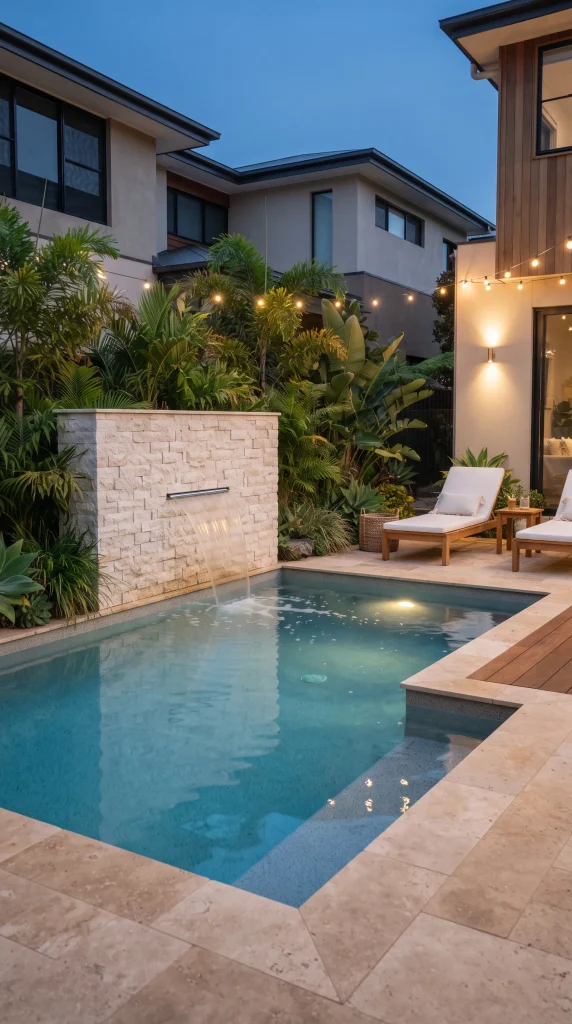
- Choose one focal wall: Place the feature on a pool boundary where it can be clearly seen without crowding the yard.
- Keep the design narrow: A slim cascade or wall spout adds movement without taking much floor space.
- Coordinate materials: Match the feature wall with the pool coping or surrounding paving.
- Plan drainage carefully: Make sure splash and runoff return safely to the pool system.
- Use subtle lighting: Add concealed lights if evening use is important.
Moving water can give a compact pool a more refined outdoor atmosphere while adding visual interest to a plain wall. Keep the feature proportional to the pool rather than making it oversized. A simple stone cascade or narrow spillway is usually enough to create sound, movement, and a clear focal point.
Integrated Planting Bed

| Feature | Option A: Separate Planters | Option B: Integrated Bed |
| Floor Space | Uses movable areas | Uses a defined border |
| Appearance | Flexible and casual | More built-in and cohesive |
| Maintenance | Easy to rearrange | Requires planned access |
| Best Use | Rental or flexible layouts | Permanent backyard designs |
An integrated planting bed gives greenery a permanent place beside the pool without scattering pots across the deck. Keep the bed narrow and select plants that tolerate the local climate. Leave a clear strip between foliage and water so leaves are easier to remove and the pool remains simple to maintain.
Minimalist Pool Lighting

DO:
- Use low-glare underwater lighting for gentle evening illumination.
- Highlight steps and changes in elevation for safer movement.
- Keep fixtures visually discreet around the pool.
- Use warm-toned landscape lights for nearby plants and seating.
DON’T:
- Aim bright lights directly toward seating areas.
- Overload the pool with multiple competing colors.
- Place exposed cables where people walk.
- Ignore local electrical safety requirements.
Subtle lighting can extend the useful hours of a backyard pool while helping define important areas after sunset. Keep the brightest illumination near steps and entry points, then use softer light around plants and seating. For a compact space, restraint matters because too much lighting can make the setting feel busy rather than relaxing.
Cozy Pool Pergola
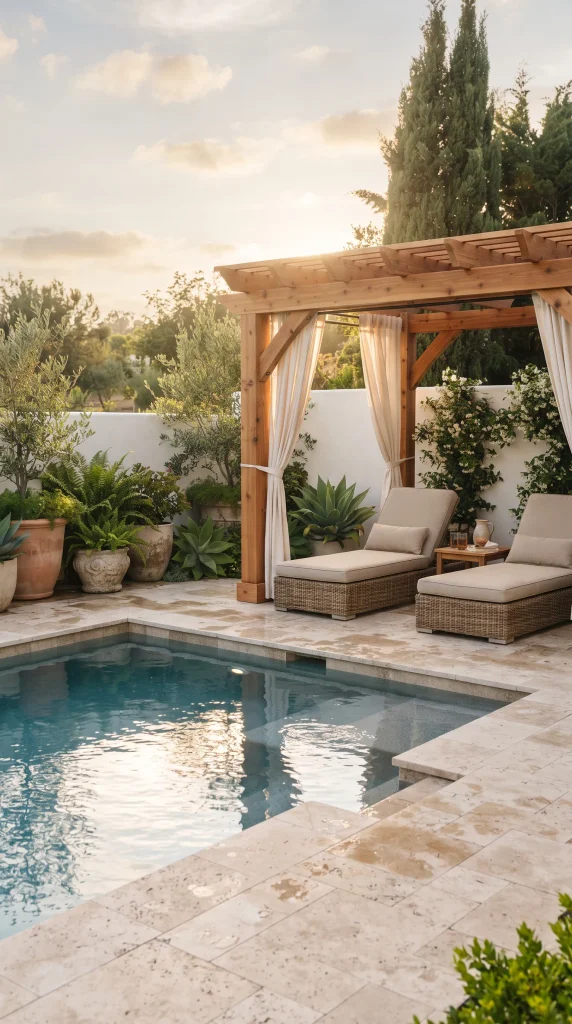
Cost: Moderate | Time: One to three days for a simple structure | Skill Level: Intermediate
Best For: Sunny backyards | Materials: Wood or metal | Result: Shade and defined lounging area
A compact pergola can give a small pool a dedicated shaded retreat without requiring a large structure. Keep the footprint narrow and place it along one side of the pool. Add two loungers or a small bench underneath, leaving the remaining deck open for movement and maintenance.
CONCLUSION
Creating a relaxing backyard does not require a huge pool or an oversized outdoor area. The right layout, materials, lighting, greenery, and seating can make a compact space feel comfortable and useful. These small pool design ideas offer practical inspiration for creating a retreat that fits your yard and everyday routine.
I’ve seen how small changes in layout and details can completely shift the way an outdoor space feels. Choose one idea that suits your needs, adapt it to your available space, and start planning. Save this post on Pinterest for later, try your favorite ideas, and share it with someone planning their own backyard retreat.