19 Stunning Ornamental Grasses Landscaping Ideas
Beautiful landscaping does not always require complicated planting plans or constant upkeep. Ornamental grasses landscaping can add texture, movement, privacy, and year-round visual interest while keeping your outdoor space feeling natural and inviting.
Whether your yard feels plain, your fence needs softening, or your garden beds need more structure, ornamental grasses offer plenty of creative options. You can use them along pathways, around trees, beside patios, near fences, or in decorative containers. Different heights, colors, and textures can create a layered look without overwhelming the space.
In my experience, repeating a few grass varieties throughout a yard often creates a more polished appearance than using too many different plants. The ideas in this guide will help you choose practical layouts that suit modern, cottage, minimalist, and relaxed garden styles. Save your favorite ideas and use them as inspiration for your next outdoor project.
Grass Ornamental Border
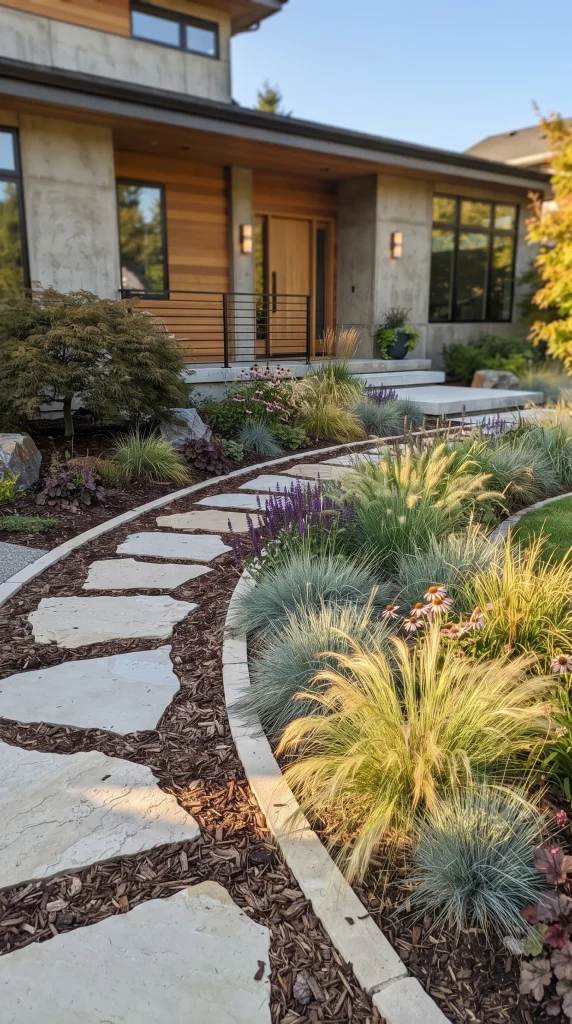
Ornamental grass borders add movement and texture without making a yard feel crowded. Tall varieties can create a soft screen, while shorter grasses define paths and planting beds. Pair different heights for a layered look, keeping the tallest plants toward the back.
In my experience, repeating the same grass in several areas makes the landscape feel intentional. Leave enough space between mature plants for airflow and growth. A simple border of grasses can also soften hard surfaces such as concrete, brick, and stone.
Layered Grass Beds

- Tall grasses: Place them toward the back to create height and privacy.
- Medium grasses: Use these through the center to build visual depth.
- Low grasses: Position them along the front edge for a tidy transition.
- Color contrast: Mix green, blue-green, and bronze foliage for added texture.
- Spacing: Check the mature width before planting so the bed does not become overcrowded.
Layering works especially well in larger garden beds because each plant has a clear visual role. Choose grasses with different forms rather than simply adding more varieties. Upright foliage adds structure, while arching blades soften the edges. This approach creates depth while keeping maintenance manageable throughout the growing season.
Grasses Around Stone Paths
Quick Tip:
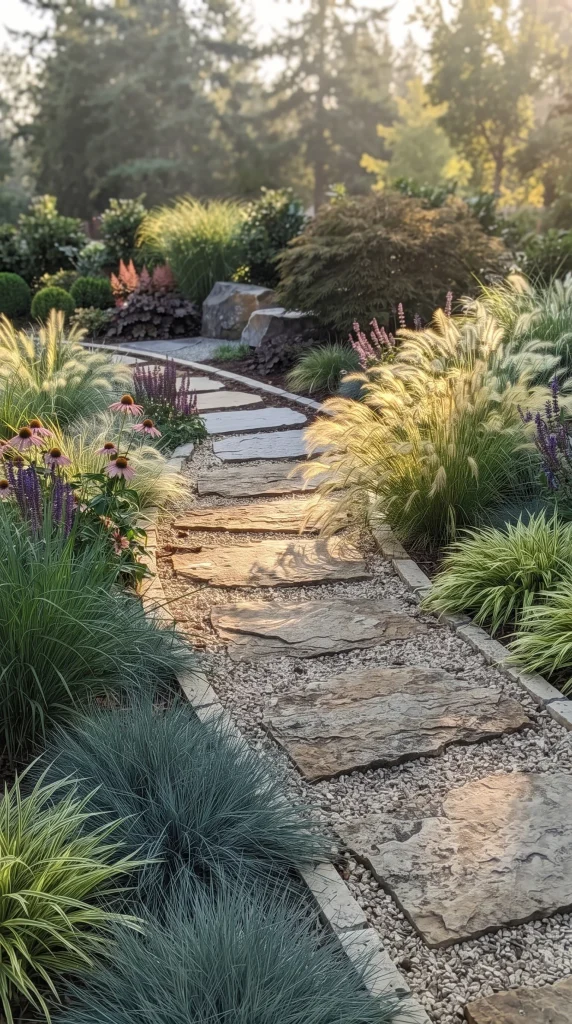
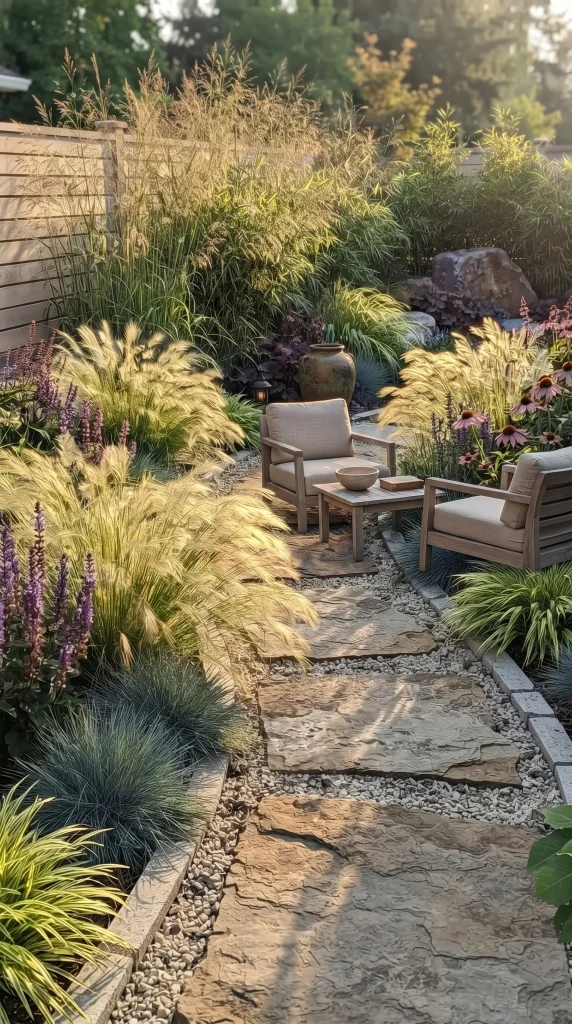
Keep ornamental grasses slightly back from the walking surface so leaves do not spill into the path. Use compact varieties along narrow walkways and taller grasses beside wider paths. A gravel or mulch strip between plants and stones also helps keep maintenance simple.
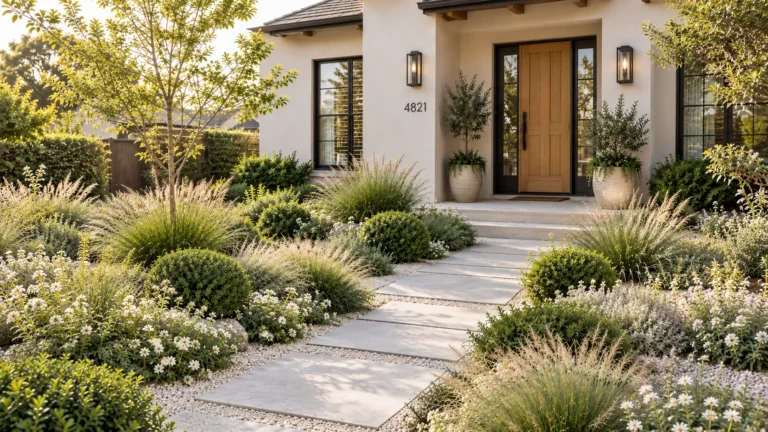
A stone path feels more connected to the garden when grasses soften its hard edges. Plant in small repeating groups rather than placing individual specimens randomly. I’ve noticed this arrangement photographs especially well because the foliage creates natural framing around the walkway without hiding the path itself.
Grasses with Gravel

BEFORE:
A gravel yard can feel flat when the surface has no height or texture. Large open areas may also look unfinished, especially around patios or pathways.
AFTER:
Clusters of ornamental grasses break up the gravel with soft movement and vertical interest. Repeating several plants creates rhythm while keeping the overall design clean.
Gravel provides excellent contrast against fine grass blades and makes the planting arrangement feel modern. Choose drought-tolerant varieties when appropriate for your climate, and install a suitable landscape fabric or prepare the soil properly before spreading gravel. Keep a clear gap around plant crowns to reduce moisture-related problems.
Tall Privacy Grasses
Choose the location: Plant tall grasses along the exposed side of the yard where privacy is needed.
- Check mature height: Select varieties that can reach the desired screening height without blocking important views.
- Measure spacing: Follow the plant’s mature width rather than crowding young plants together.
- Prepare the soil: Loosen compacted soil and improve drainage if needed.
- Maintain the screen: Remove old foliage at the appropriate time for the selected grass species.
Tall grasses can create a softer privacy screen than a solid wall or fence. Their movement adds life while still providing visual separation. For patios, position the planting screen where it blocks ithout restricting sunlight or airflow. Always check the mature size before planting near structures.
Grass and Stone Contrast

| Feature | Option A: Dense Planting | Option B: Open Planting |
| Visual effect | Full and lush | Clean and spacious |
| Maintenance | More trimming and cleanup | Easier access between plants |
| Stone visibility | Less prominent | Strong focal element |
| Best setting | Large garden beds | Modern or minimalist yards |
Stone and grass create a useful balance between hard and soft textures. Dense planting produces a fuller garden appearance, while wider spacing lets decorative stones become part of the design. For a Pinterest-friendly composition, repeat similar stones throughout the bed rather than mixing too many shapes, colors, and materials.
Curved Grass Borders

DO:
- Mark the curve with a garden hose before digging.
- Repeat the same grass variety along the border for visual rhythm.
- Keep the planting line smooth and consistent.
- Leave enough room for mature growth.
DON’T:
- Create sharp, uneven turns that interrupt the lawn.
- Mix too many grass varieties in a small border.
- Plant directly against paving or walls.
- Ignore the mature width of each plant.
A curved edge gives ornamental grass landscaping a softer, more natural flow. The gentle shape also guides the eye through the garden and works well around lawns, patios, and planting beds. Use repeated clusters rather than isolated plants for a cleaner appearance that remains easy to maintain as the grasses mature
Patio Grass Planters

Cost: Moderate | Large planters can increase the overall budget.
Time: One afternoon | Planting and arranging can be completed quickly.
Skill Level: Beginner | Basic container gardening knowledge is enough.
Best For: Patios, balconies, decks, and small yards.
Container grasses bring texture to outdoor spaces without requiring a permanent planting bed. Choose containers with drainage holes and select plants suited to the available sunlight. I’ve noticed that grouping two or three planters at different heights creates stronger visual balance than scattering containers across the patio.
Entryway Grass Clusters

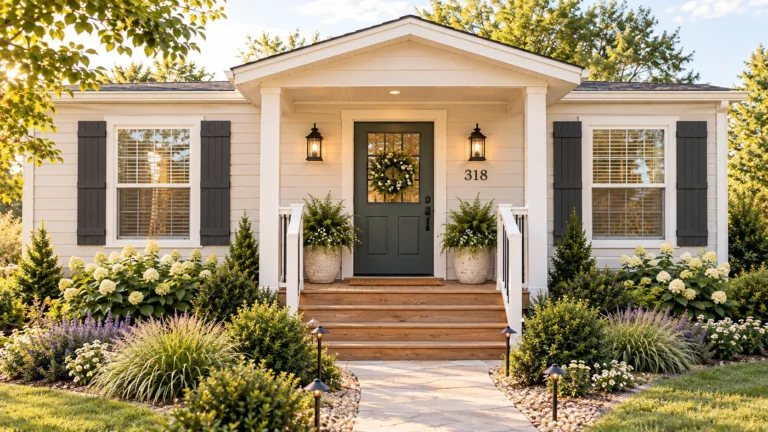
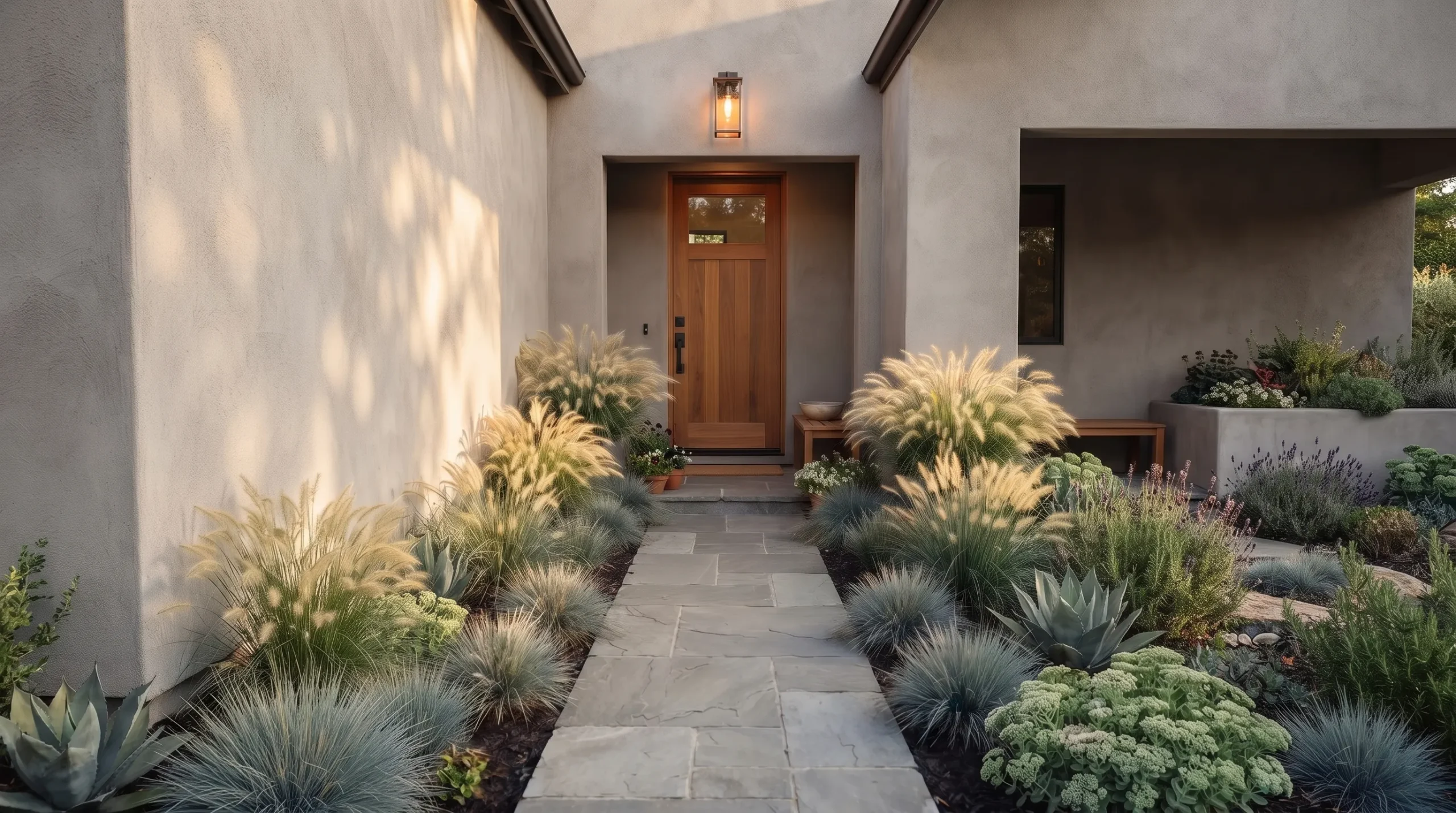
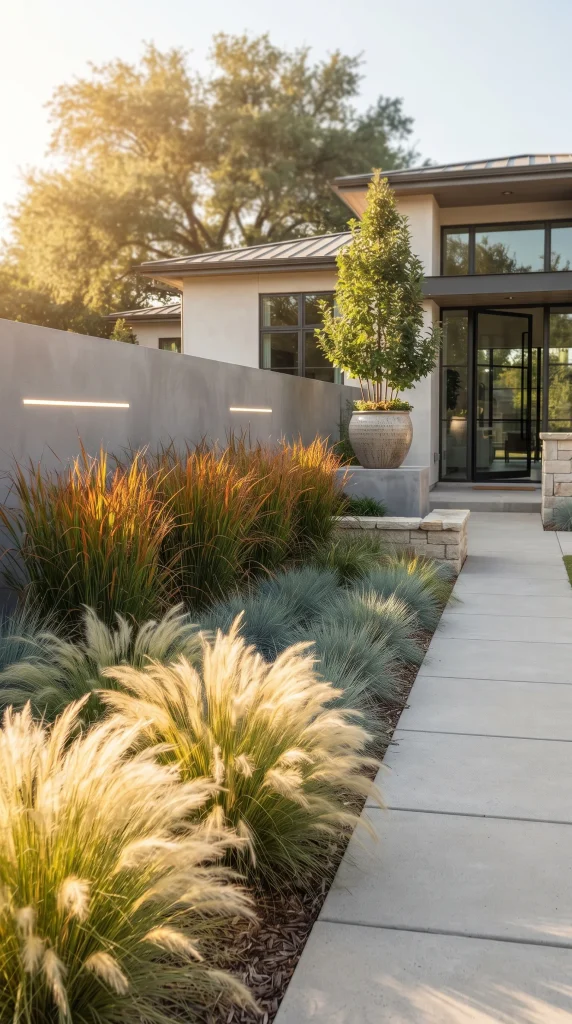
The front entrance gains instant structure when grasses frame the walkway or doorway. Keep taller varieties toward the outer edges and shorter plants closer to the path so the entrance remains open and easy to navigate.
For a balanced look, repeat the same grass on both sides of the entry rather than creating two unrelated planting designs. Choose foliage colors that complement the home’s exterior, such as silver-green beside gray stone or golden tones against warm brick.
Grasses Around Trees

- Plant grasses around the outer root zone rather than directly against the trunk.
- Choose shade-tolerant varieties if the tree creates heavy shade.
- Use small groups of repeating plants for a cohesive appearance.
- Add mulch carefully to conserve moisture without covering the trunk base.
- Water new plants consistently while they establish.
A tree can become a strong anchor for a layered planting bed. Ornamental grasses soften the transition between the trunk and surrounding lawn while adding movement at ground level. Before planting, check soil moisture and available sunlight because mature trees often compete with nearby plants for both water and light
Mixed Texture Planting
Quick Tip:
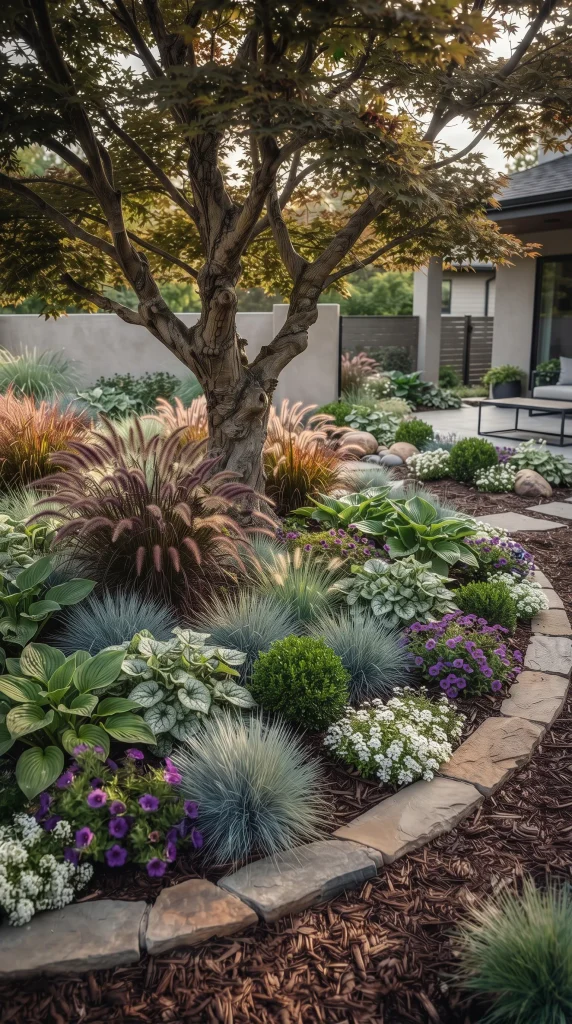
Build contrast by combining different leaf shapes rather than relying only on flower color. Pair fine grass blades with broad leaves, rounded shrubs, or small flowering plants. Keep the color palette limited to three or four related tones so the planting bed feels coordinated instead of visually crowded.
Texture becomes especially noticeable when a garden has limited flowers. Fine grass blades create movement, while broader foliage gives the eye a place to rest. I’ve seen mixed plantings work particularly well near patios because the different leaf forms remain interesting throughout the season, even between flowering periods.
Minimalist Grass Rows
BEFORE:
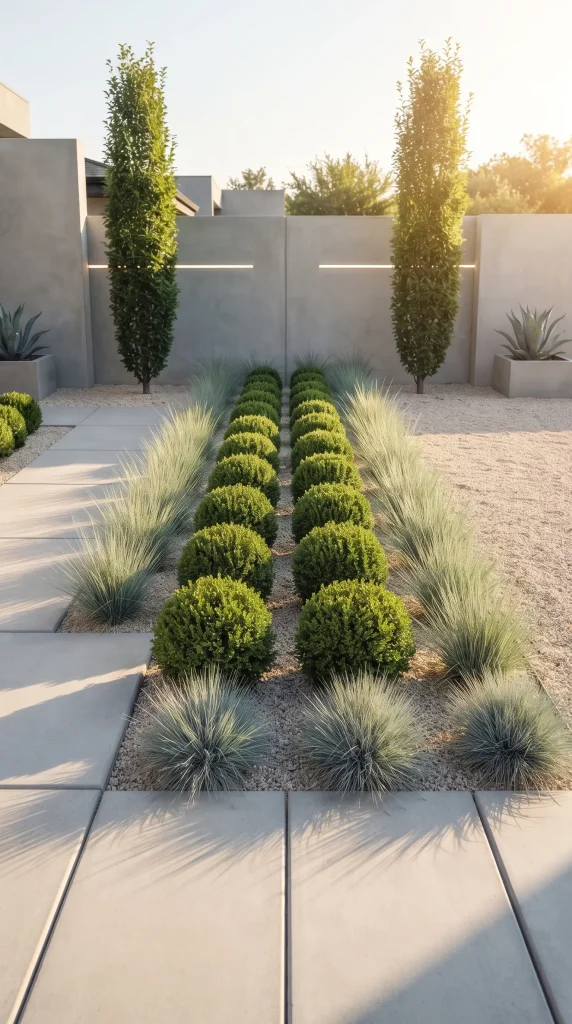
A large open garden area can look unfinished when plants are scattered without a clear pattern. Random spacing may also make maintenance more difficult.
AFTER:
Even rows of ornamental grasses introduce structure and repetition. The consistent spacing creates a calm, architectural appearance while leaving enough open ground to highlight the surrounding materials.
Rows work best when the planting area has clear lines or strong architectural features. Measure the space before planting and mark each position with temporary stakes. For a polished result, keep the spacing consistent and choose one dominant grass variety. This simple layout suits modern homes, narrow side yards, and contemporary entry gardens
Poolside Grass Planting
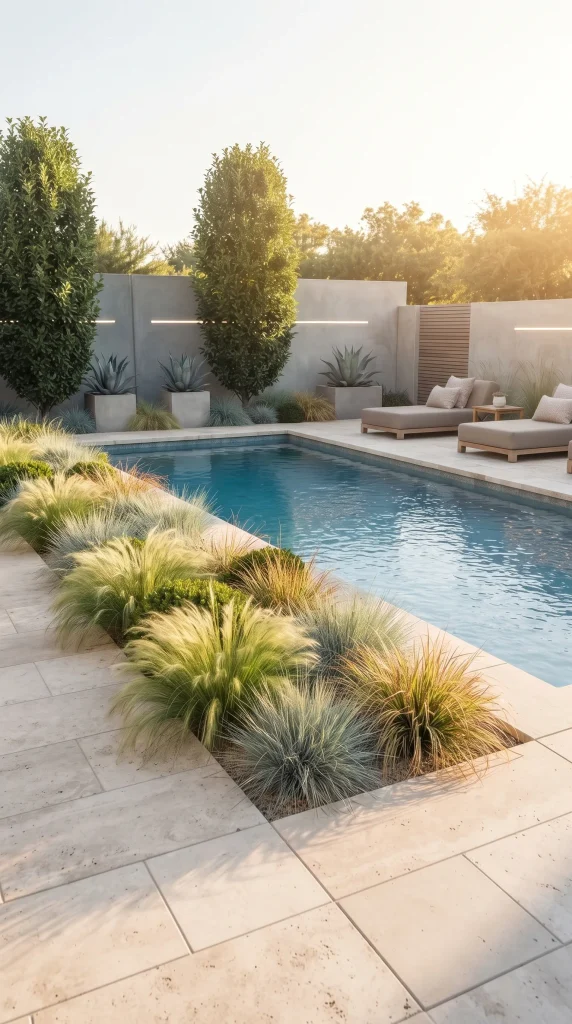
- Mark the planting zone: Keep grasses far enough from the pool edge to prevent foliage from falling into the water.
- Choose suitable varieties: Select grasses that tolerate your local sun, soil, and moisture conditions.
- Prepare drainage: Make sure the planting area does not stay waterlogged after irrigation or rain.
- Add a clean edge: Use stone, gravel, or pavers to separate planting soil from the pool deck.
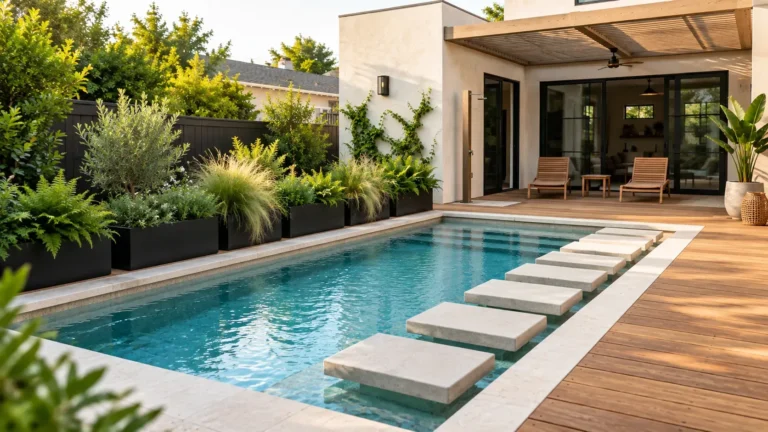
Poolside grasses soften hard paving and add movement around a structured outdoor area. Silver and blue-green foliage works especially well beside water because the cool tones complement the pool. Keep mature plant size in mind, particularly near filtration equipment, walkways, and areas where falling leaves could become inconvenient
Front Yard Grass Screen
| Option A | Option B |
| Plant height: Tall varieties | Plant height: Medium varieties |
| Privacy: Stronger visual screening | Privacy: Partial screening |
| Maintenance: More seasonal trimming | Maintenance: Generally easier access |
| Best use: Exposed front yards | Best use: Open entry spaces |
A grass screen can add privacy without making a front yard feel closed in. Tall varieties create stronger separation, while medium grasses keep the home’s architecture visible. Consider how the plants will look from both the street and inside the house before deciding on height, spacing, and placemet.n
Grasses with Flowering Plants

DO:
- Pair fine grass blades with flowers that have contrasting leaf shapes.
- Repeat flower colors throughout the planting bed.
- Place taller grasses behind shorter flowering plants.
- Choose plants with compatible sunlight and watering needs.
DON’T:
- Crowd flowers directly against mature grass clumps.
- Mix too many competing flower colors.
- Hide low plants behind oversized grasses.
- Choose companions with very different water requirements.
Flowering plants bring seasonal color, while ornamental grasses provide structure before and after many blooms fade. The combination works best when each plant has room to show its shape. For a cohesive garden, repeat two or three flower colors and allow the grasses to act as the consistent thread throughout the planting design.
Grasses Along Fences

Cost: Low to moderate | Depends on the number and size of plants.
Time: One to two afternoons | Allow extra time for soil preparation.
Skill Level: Beginner | Suitable for basic DIY landscaping.
Best For: Privacy, softening fences, and narrow side yards.
A fence can look stark when it meets an empty lawn, but a planting strip of grasses creates a softer transition. Space plants according to their mature width and keep them far enough from the fence for maintenance access. This layout is especially useful for long boundaries that need visual interest without complicated garden structures.
Modern Corner Planting

Modern corners benefit from a simple planting arrangement with strong shapes. Start with one taller grass as the focal point, then add two or three shorter varieties around it. Keep the surrounding surface uncluttered so the foliage remains visually dominant.
I’ve noticed that corner beds often look better with fewer plant types. Repetition creates order, while different grass heights add depth. A small gravel area or concrete edging can reinforce the modern style and make the planting zone easier to maintain throughout the year.
Drought-Tolerant Grass Bed
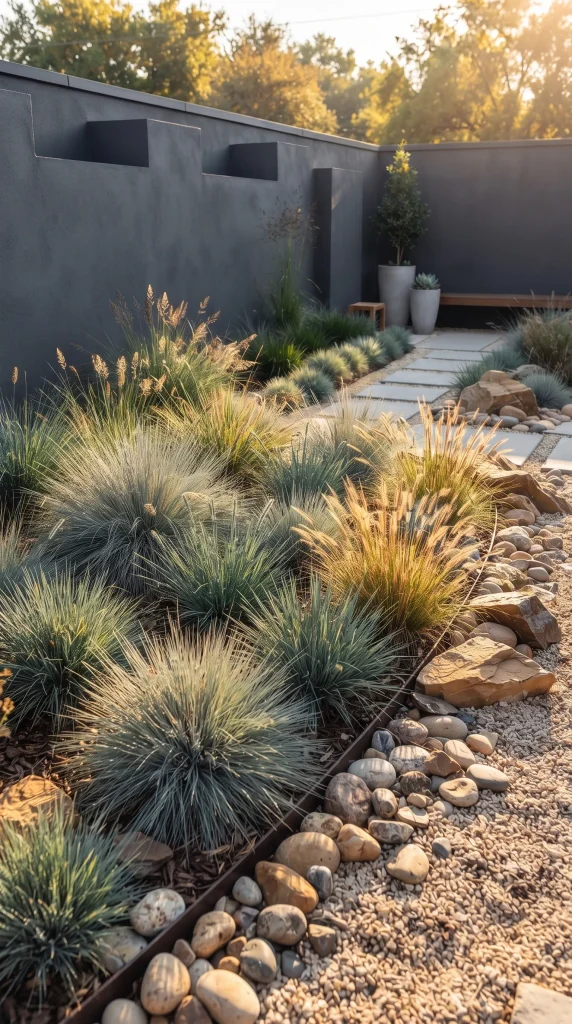
- Assess sunlight: Choose grasses that tolerate the amount of direct sun your planting area receives.
- Improve drainage: Avoid planting moisture-sensitive varieties in areas where water collects.
- Group similar plants: Place grasses with comparable water requirements together.
- Mulch appropriately: Use gravel or suitable organic mulch to help reduce moisture loss.
- Water during establishment: New plants generally need more consistent watering until their roots develop.
Drought-tolerant ornamental grasses can reduce the need for frequent irrigation once established, provided the selected species suit the local climate. Their fine foliage also pairs naturally with gravel, stone, and other low-water landscape materials. Check local growing conditions before choosing varieties, especially in regions with extreme heat or seasonal rainfall.
Layered Backyard Retreat

Cost: Moderate | Depends on plants, edging, and seating materials.
Time: One to three weekends | Larger beds require more preparation.
Skill Level: Beginner to intermediate | Basic planting skills are sufficient.
Best For: Backyards, patios, and relaxing outdoor seating areas.
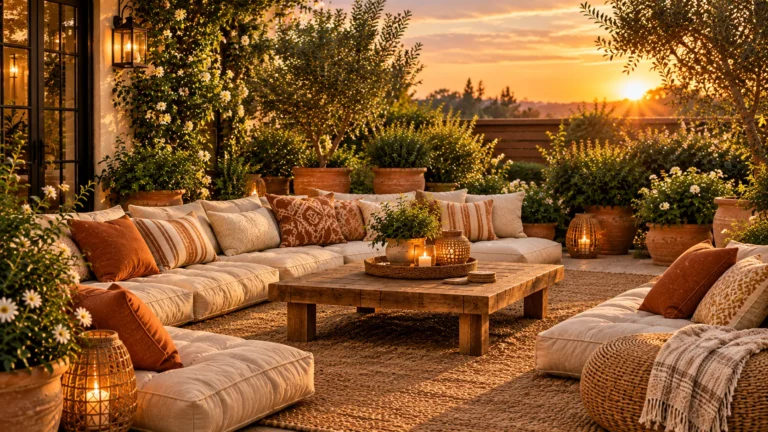
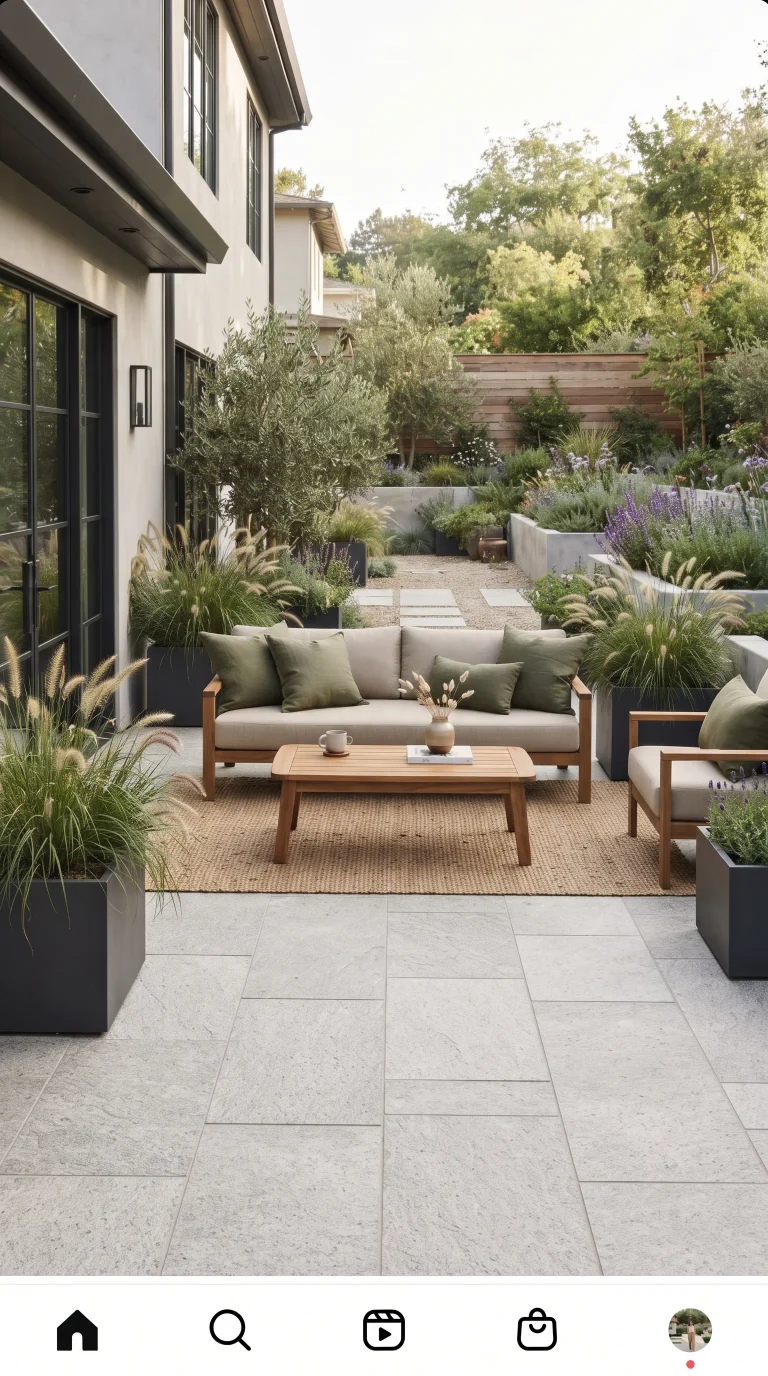
A layered backyard planting brings several landscaping ideas together without making the space feel crowded. Start with taller grasses at the rear, medium plants around the seating area, and low foliage near paths. Add comfortable seating and simple lighting so the garden remains useful after sunset.
Keep the planting palette consistent across the yard for a connected appearance. Repeat a few grass varieties instead of buying many unrelated plants. The result is a practical outdoor retreat with texture, privacy, and seasonal interest that can continue developing as the plants mature.
Ornamental grasses landscaping ideas as a starting point, then adapt the plants, spacing, and materials to your climate and available space. I’ve seen how small planting changes can completely shift the way a garden feels. Save this post on Pinterest, try an idea that fits your yard, and share it with someone planning their next garden project.